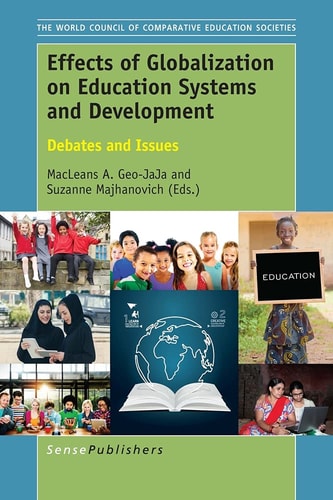
Effects of Globalization on Education Systems and Development: Debates and Issues
0
0
As an Amazon Associate and affiliate partner, Menrva Books earns from qualifying purchases. Learn more
Author Description
With its comprehensive coverage and quality this provocative book is concerned with the future of developing countries in Africa, Asia and Latin America. By providing in-depth analysis of the economic, social and educational challenges of emerging states it offers an alternative roadmap to development. The authors in this collection substantiate the notion that emerging states often do not participate in policy choices related to their development when faced with universalization of curriculum and internationalization of education. The authors make explicit the direct and indirect effects of globalization on educational systems, social equity, and the path of development. In demonstrating the impact of neoliberalism or market-based reforms on the developing world, the authors show that education without human rights is vulnerable to negative forces of globalization and internationalization. The message of the book is quite pessimistic about possibilities to widen the economic space or increase freedom, unless development cooperation is made possible by "Helping People Help Themselves" as suggested by David Ellerman. The authors note that in the past, the issue of emerging states as an appendage to the world economy was a fundamental question related to colonialism, but now has become a question of imperialism which needs to be examined when considering the current patterns of development.
Menrva's Summary
THE THESIS
This book investigates the complex interplay between globalization and the educational systems of developing nations, particularly in Africa, Asia, and Latin America. It offers an in-depth analysis of the economic, social, and educational challenges faced by emerging states, proposing an alternative roadmap for development. The authors argue that globalization's universalization of curriculum and internationalization of education often marginalize developing nations from policy choices crucial to their own progress. The book critically examines the impact of neoliberalism on these systems, highlighting the vulnerability of education without human rights to the negative forces of global economic and political trends.
THE SCOPE MAP
- Analysis of economic, social, and educational challenges in developing countries.
- Exploration of the impact of globalization on educational systems and social equity.
- Examination of the role of neoliberalism and market-based reforms.
- Discussion of the relationship between education, human rights, and globalization.
- Critique of internationalization of education and its effect on policy choices.
- Historical context of emerging states' economic position, from colonialism to imperialism.
- Consideration of development cooperation and the concept of 'Helping People Help Themselves'.
THE AUTHORITY PERSPECTIVE
The book is presented as a provocative examination of the future of developing countries, offering an alternative roadmap for development through in-depth analysis of economic, social, and educational challenges. It substantiates the notion that emerging states are often excluded from policy choices due to the universalization and internationalization of education. The authors explicitly detail the direct and indirect effects of globalization on educational systems, social equity, and development paths, demonstrating the impact of neoliberalism. The overall message is described as pessimistic regarding the expansion of economic space or freedom without a framework of development cooperation.
Page Count:
147
Publication Date:
2016-01-01
Publisher:
Sense Publishers
ISBN-10:
946300727X
ISBN-13:
9789463007276
Politics
Economics
Non-Fiction
Education
Globalization
Neoliberalism
Social Equity
Community Tags
Similar Books