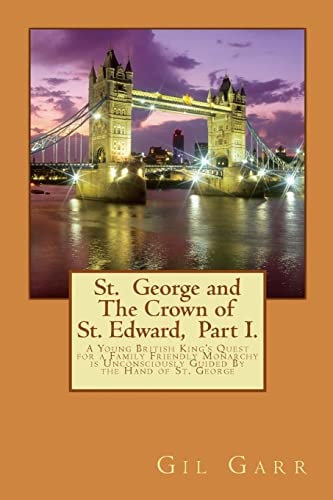
St. George and The Crown of St. Edward Part 1: A Young British King's Quest for a Family Friendly Monarchy is Unconsciously Guided By the Hand of St. George
0
0
As an Amazon Associate and affiliate partner, Menrva Books earns from qualifying purchases. Learn more
Author Description
In the year 2160, a young British monarch, King William-Charles I, executes a plan begun since the reign of Queen Victoria to create a family-friendly monarchy. The king's bold action was to begin with the royal duty annual calender followed since the reign of Queen Elizabeth II that included 315 days. William-Charles would revise that traditional royal calender down to 180 days a year in order to neither place the Crown nor State obligations first or second to his family. Thus, to allow for an annual calender that would permit William-Charles to serve not only as the King of the Realm, but as a husband and father, too. However, the quest to develop a family friendly monarchy while ensuring that his devotion to the People of the Commonwealth was no less than his father's before him, due to a reduced annual calender, came with potential consequences. Therefore, it was that deep desire for a family friendly monarchy that drove the king's devotion to the guiding hands of St. George, the patron saint of England. For those individuals who have truly believed that saints have, indeed, influenced decisions of the living and have altered or designed the future, "St. George and The Crown of St. Edward" may prove to validate such convictions. After all, no human can truly bring a monarch unconditional trust in regards to deep personal feelings or distress, for there will always be that fear of confidential betrayal. No, only prayer can open the mind to the actual burdens and personal sufferings of a king or queen. To the few that have fallen into a predetermined lifestyle with little hope or support to alter their circumstances, can one presume that only a divinity, like a saint, has probably intervened at times of grief, disappointment and doom. Regardless of severe family crisis, betrayals, executions, revolts, physical assaults on their person, and conspiracy the British Monarchy has prevailed since the reign of Edward the Confessor in 1042. St. George as the patron saint
Menrva's Summary
THE PULSE
A young king attempts to balance his royal duties with his family life, seeking divine guidance to navigate the potential consequences of his reforms. King William-Charles I, in the year 2160, initiates a radical revision of the royal calendar, reducing the official duties from 315 to 180 days to prioritize his family. This decision, aimed at fostering a more family-friendly monarchy, risks alienating the Commonwealth and potentially invites unforeseen challenges. The king's devotion to St. George, the patron saint of England, becomes his primary source of strength and guidance as he grapples with the personal and political ramifications of his quest.
INSIDE THE PAGES
- A future setting in the year 2160, focusing on the British monarchy.
- The protagonist is King William-Charles I, a young monarch.
- The central conflict revolves around revising the royal calendar to prioritize family.
- The narrative explores the tension between royal duty and personal life.
- St. George, the patron saint of England, plays a guiding role in the king's decisions.
- The book touches upon themes of faith, divine intervention, and the endurance of the monarchy.
- The story contrasts historical royal traditions with future aspirations for a 'family-friendly' monarchy.
THE COLLECTIVE ECHO
The premise suggests a narrative that blends historical speculation with a focus on personal conviction and the role of faith in leadership. The author's choice to set the story in the future while referencing historical figures like Queen Victoria and Queen Elizabeth II indicates an interest in the evolution of the monarchy and its enduring traditions. The emphasis on St. George's guidance points towards a story that may explore themes of destiny and the impact of spiritual belief on secular power. The narrative appears designed to appeal to readers interested in royal history, speculative fiction, and stories of personal and spiritual guidance.
Page Count:
96
Publication Date:
2013-11-21
Publisher:
CreateSpace Independent Publishing Platform
ISBN-10:
1493798871
ISBN-13:
9781493798872
Fiction
Historical Fiction
Political fiction
Speculative Fiction
Community Tags
Similar Books












Reader Comments
Share Your Thoughts
No comments yet. Be the first to share your thoughts!