Urban Air Pollution in Asian Cities
0
0
As an Amazon Associate and affiliate partner, Menrva Books earns from qualifying purchases. Learn more
Author Description
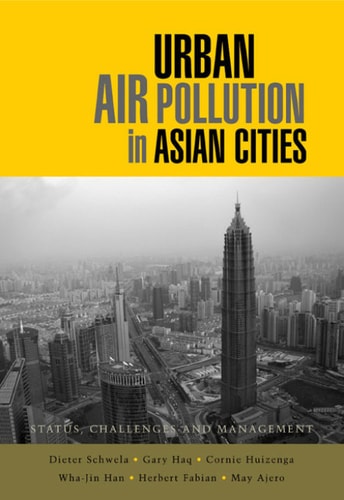
Air pollution has become part of the daily existence of many people who work, live and use the streets in Asian cities. Each day millions of city dwellers breathe air polluted with concentrations of chemicals, smoke and particles that dramatically exceed World Health Organization guideline values. Deteriorating air quality has resulted in significant impacts on human health and environment in Asia. This book provides a comprehensive and comparative assessment of the current status and challenges in urban air pollution management in 20 cities in the Asian region. It examines the effects on human health and the environment and future implications for planning, transport and energy sectors. National and local governments have begun to develop air quality management strategies to address the deterioration in urban air quality; however, the scope and effectiveness of such strategies vary widely. This book benchmarks these air quality management strategies, examines successes and failures in these cities and presents strategies for improving air quality management in cities across Asia and the rest of our rapidly urbanizing world. Information on air quality in Asia is clearly presented with easy-to-read city profiles, tables and graphs. This is an essential resource for all those concerned with urban air quality management, not just in Asia but in cities across our rapidly urbanizing world. Cities covered Bangkok, Beijing, Busan, Colombo, Dhaka, Hanoi, Ho Chi Minh City, Hong Kong, Jakarta, Kathmandu, Kolkata, Metro Manila, Mumbai, New Delhi, Seoul, Shanghai, Singapore, Surabaya, Taipei and Tokyo
Menrva's Summary
THE THESIS
Urban air pollution poses a critical threat to the health and environment of millions in Asian cities. This book offers a comparative assessment of air pollution management in 20 major Asian cities, detailing the significant health and environmental impacts of exceeding World Health Organization guideline values for pollutants. It analyzes the varying effectiveness of national and local air quality management strategies, identifying successes and failures to inform future planning in transport and energy sectors. The work aims to provide a benchmark for improving air quality management globally in rapidly urbanizing regions.
THE SCOPE MAP
- Comparative assessment of urban air pollution management in 20 Asian cities.
- Analysis of health and environmental impacts of air pollution.
- Examination of national and local air quality management strategies, including successes and failures.
- Future implications for planning, transport, and energy sectors.
- City profiles, tables, and graphs presenting air quality data.
- Strategies for improving air quality management in urban areas.
THE AUTHORITY PERSPECTIVE
The book is presented as an essential resource for those concerned with urban air quality management, particularly in Asia and other rapidly urbanizing parts of the world. Its strength lies in its comprehensive and comparative approach, offering clear presentation of data through city profiles, tables, and graphs. The work benchmarks existing strategies, highlighting both effective measures and areas where improvements are needed. It aims to provide actionable insights for policymakers and professionals involved in environmental and urban planning.
Page Count:
296
Publication Date:
2012-05-16
Publisher:
Taylor & Francis
ISBN-10:
1136549366
ISBN-13:
9781136549366
Science
Non-Fiction
Public Health
urban planning
Asia
Environment
Community Tags
Similar Books