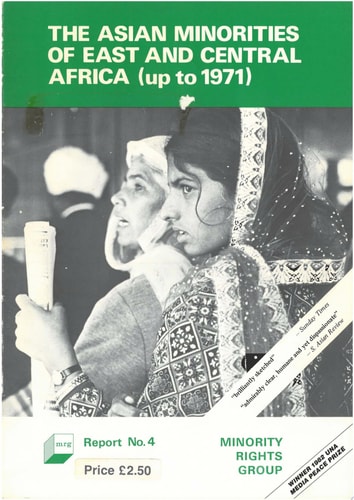
The Asian Minorities of East and Central Africa (up to 1971)
0
0
As an Amazon Associate and affiliate partner, Menrva Books earns from qualifying purchases. Learn more
Author Description
One of the most striking problems following in the wake of decolonization in East and Central Africa has been the situation and fate of its minorities. Of these minorities, Asians, for reasons of colour and economic position, are the most clearly visible. The problem of Asian and other minorities did not, of course, arise only after independence. Most European colonies were plural societies, composed of various tribes and races, and the colonial period was by no means free from rivalries and tensions between these groups. European overrule, however, tended to contain these tensions within tolerable limits. This is not to say that conditions were ideal, and certainly, the European colonial authority was seldom a passive and impartial umpire, particularly where immigrant minorities were involved. These were usually more favoured than the indigenous people, though not all immigrant groups were equally favoured. The coming of independence changed the situation of minorities in significant ways. There is always a struggle for control of the new state. The forces involved draw their support from tribal or regional bases and the goal for which they contend is the establishment of a state with highly centralized powers. There is little of the ‘federal’ sharing of power. Though alliances may be struck between groups to participate in the government, there is a strong flavour of winner-takes-all about the spoils system that characterizes these new states. To be a politically weak minority is therefore an unfortunate circumstance.In many respects, the consequences are similar whether the minority is indigenous or immigrant. But there are also several important distinctions. First, an immigrant minority is regarded as alien – a view which is reinforced after independence when it is seen that large numbers of them are not and do not become citizens of the new state. Second, they tend to be more prosperous and privileged than the rest. These two factors often combine to
Page Count:
24
Publication Date:
1971-04-01
Publisher:
Minority Rights Group
ISBN-10:
0903114038
ISBN-13:
9780903114035