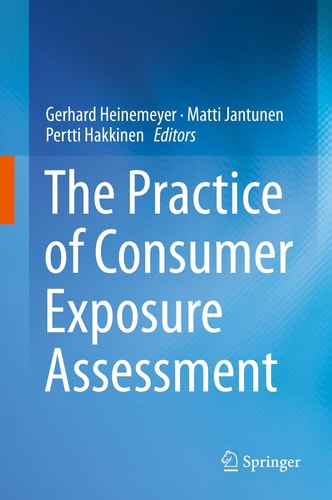
The Practice of Consumer Exposure Assessment
0
0
As an Amazon Associate and affiliate partner, Menrva Books earns from qualifying purchases. Learn more
Author Description
This book closes a current gap by providing the scientific basis for consumer exposure assessment in the context of regulatory risk assessment. Risk is defined as the likelihood of an event occurring and the severity of its effects. The margin between the dose that leads to toxic effects and the actual dose of a chemical is identified by estimating population exposure. The objective of this book is to provide an introduction into the scientific principles of consumer exposure assessment, and to describe the methods used to estimate doses of chemicals, the statistics applied and computer tools needed. This is presented through the backgrounds of the special fields in exposure analysis, such as exposure via food and by the use of consumer products, toys, clothing and other items. As a general concept, human exposure is also understood to include exposure via the environment and from the work setting. In this context, the specific features of consumer exposure are pointed out and put into the context of regulation, in particular food safety, chemicals safety (REACh) and consumer product safety. The book is structured into three parts: The first part deals with the general concepts of consumer exposure as part of the overall risk analysis framework of risk characterization, risk assessment and risk communication. It describes the three basic features of exposure assessment (i) the exposure scenario (ii) the exposure model and (iii) the exposure parameters, addressing external and internal exposure. Also, the statistical presentation of data to characterize populations, in connection with variability, uncertainty and quality of information and the presentation of exposure evaluation results is described. The second part deals with the specific issues of exposure assessment, exposure via food consumption, exposure from use of consumer products, household products, toys, cosmetic products, textiles, pesticides and others. This part also covers methods for acquisitio
Page Count:
584
Publication Date:
2020-01-30
Publisher:
Springer International Publishing
ISBN-10:
3319961470
ISBN-13:
9783319961477
Community Tags
Reader Comments
Share Your Thoughts
No comments yet. Be the first to share your thoughts!