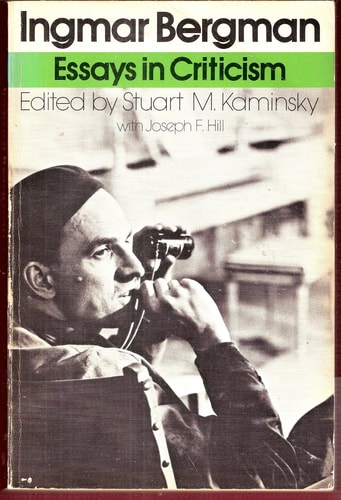
Ingmar Bergman: Essays in Criticism
0
0
As an Amazon Associate and affiliate partner, Menrva Books earns from qualifying purchases. Learn more
Author Description
Whether one admires Ingmar Bergman's films or not, his importance in the history of cinema cannot be minimized. Bergman, more than any other film-maker, made cinema a respectable study, a field for scholars and intellectuals as well as reviewers. The foremost director of the art film, Bergman has suddenly, since Cries and Whispers and Scenes from a Marriage, become a film-maker whose work appeals to a broader audience as well. Why are Bergman;s films so compelling? Why are they more talked and written about than any other film-maker's? Approaching Bergman's life and work from a host of analytical perspectives rather than from the narrow focus of a single scholar or critic, Ingmar Bergman presents articles by psychiatrists, clergymen, academics, and film-makers. The twenty-five authors are from England, Scandinavia, Canada, and the United States. Contributors such as Robin Wood, Susan Sontag, and Penelope Gilliatt discuss every film, from Bergman's earliest work through Scenes from a Marriage. Bergman himself is represented by his own famous essay "each Film Is My Last," as well as through a major interview with Charles Thomas Samuels. The emphasis is on non-evaluative criticism - criticism that is neither positive nor negative but illuminating. The result is an invaluable aid to understanding and appreciating existing Bergman's films - as well as those to come.
Menrva's Summary
THE THESIS
This collection investigates the enduring cultural and intellectual significance of Ingmar Bergman’s filmography through a multidisciplinary lens. The editors, Joseph F. Hill and Stuart M. Kaminsky, assemble a diverse array of perspectives to address why Bergman’s work commands such extensive critical attention. By moving beyond singular scholarly viewpoints, the text provides a comprehensive framework for analyzing the thematic and technical evolution of Bergman’s career from his early projects through his mid-career successes.
THE SCOPE MAP
What You Will Find
- A collection of twenty-five essays from international contributors including psychiatrists, clergymen, academics, and fellow film-makers.
- Analytical coverage of Bergman’s filmography spanning from his earliest works to the release of Scenes from a Marriage.
- Primary source material including Bergman’s own essay, Each Film Is My Last, and a major interview with Charles Thomas Samuels.
- A non-evaluative critical methodology designed to illuminate rather than judge the director's artistic output.
THE AUTHORITY PERSPECTIVE
Experts and film scholars frequently cite this collection as a foundational resource for understanding the intellectual reception of Bergman’s work during the mid-1970s. Readers often note the academic density of the prose, which serves as a significant reference point for those studying the intersection of art cinema and critical theory.
Page Count:
352
Publication Date:
1975-01-01
Publisher:
Oxford Univ Pr
ISBN-10:
0195019261
ISBN-13:
9780195019261
Biography
Criticism
Film Studies
Essays
Cinema History
Community Tags
Similar Books