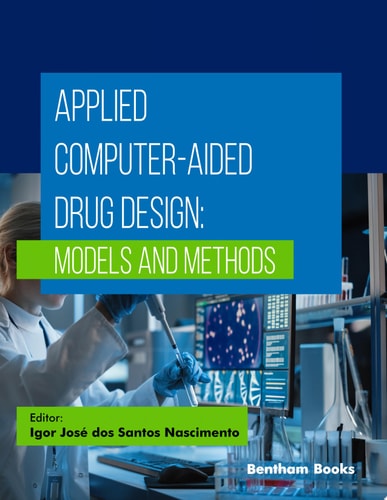
Applied Computer-Aided Drug Design: Models and Methods
0
0
As an Amazon Associate and affiliate partner, Menrva Books earns from qualifying purchases. Learn more
Author Description
Designing and developing new drugs is an expensive and time-consuming process, and there is a need to discover new tools or approaches that can optimize this process. Applied Computer-Aided Drug Design: Models and Methods compiles information about the main advances in computational tools for discovering new drugs in a simple and accessible language for academic students to early career researchers. The book aims to help readers understand how to discover molecules with therapeutic potential by bringing essential information about the subject into one volume. Key Features · Presents the concepts and evolution of classical techniques, up to the use of modern methods based on computational chemistry in accessible format. · Gives a primer on structure- and ligand-based drug design and their predictive capacity to discover new drugs. · Explains theoretical fundamentals and applications of computer-aided drug design. · Focuses on a range of applications of the computations tools, such as molecular docking; molecular dynamics simulations; homology modeling, pharmacophore modeling, quantitative structure-activity relationships (QSAR), density functional theory (DFT), fragment-based drug design (FBDD), and free energy perturbation (FEP). · Includes scientific reference for advanced readers Readership Students, teachers and early career researchers.
Menrva's Summary
THE THESIS
This book addresses the challenge of optimizing the expensive and time-consuming process of drug discovery by presenting computational tools and methods. It aims to provide academic students and early career researchers with accessible information on how to discover molecules with therapeutic potential, consolidating essential knowledge into a single volume.
THE SCOPE MAP
- Explains the concepts and evolution of classical techniques in drug design.
- Covers modern methods based on computational chemistry in an accessible format.
- Provides a primer on structure-based and ligand-based drug design and their predictive capabilities.
- Details the theoretical fundamentals and practical applications of computer-aided drug design.
- Focuses on applications including molecular docking, molecular dynamics simulations, and homology modeling.
- Explains pharmacophore modeling, quantitative structure-activity relationships (QSAR), and density functional theory (DFT).
- Discusses fragment-based drug design (FBDD) and free energy perturbation (FEP).
- Includes scientific references for advanced readers.
THE AUTHORITY PERSPECTIVE
The book is designed to be accessible to academic students and early career researchers, aiming to simplify complex computational tools for drug discovery. It covers a broad range of modern and classical methods, suggesting it serves as a comprehensive primer for those entering the field. The inclusion of detailed applications and references indicates a practical and informative approach for its intended audience.
Page Count:
366
Publication Date:
2023-12-08
Publisher:
Bentham Science Publishers
ISBN-10:
9815179942
ISBN-13:
9789815179941
Non-Fiction
Science
Computational Chemistry
Drug Design
Research Methods
Community Tags
Similar Books