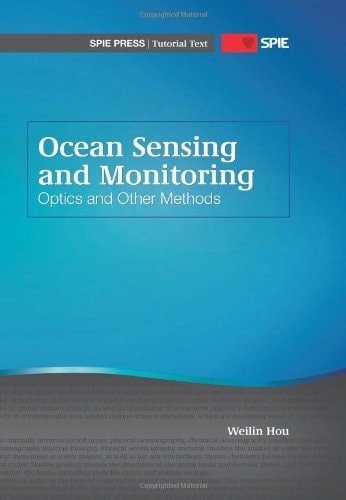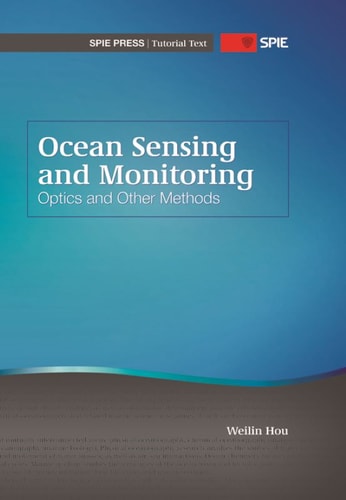
Ocean Sensing and Monitoring: Optics and Other Methods
0
0
As an Amazon Associate and affiliate partner, Menrva Books earns from qualifying purchases. Learn more
Author Description
This is an introductory text that presents the major optical ocean sensing techniques. It is suitable for professionals and managers in related disciplines, as well as students who are interested in exploring career paths in remote sensing of the ocean or ocean engineering. The book starts with a brief overview of the main branches of ocean research, including physical, chemical, biological, and geological oceanography, as well as biogeochemistry. The basic optical properties of the ocean are presented next, followed by underwater and remote sensing topics, such as diver visibility; active underwater imaging techniques and comparison to sonars; ocean color remote sensing theory and algorithms; lidar techniques in bathymetry, chlorophyll, temperature, and subsurface layer explorations; microwave sensing of surface features including sea surface height, roughness, temperature, sea ice, salinity and wind; as well as infrared sensing of the sea surface temperature. Platforms and instrumentation are also among the topics of discussion, from research vessels to unmanned underwater and aerial vehicles, moorings and floats, and observatories. Integrated solutions and future sensing needs are touched on to wrap up the text. A significant portion of the book relies on sketches and illustrations to convey ideas, although rigorous derivations are occasionally used when necessary.
Menrva's Summary
THE THESIS
This text introduces the fundamental principles and diverse methodologies of ocean sensing and monitoring, with a particular emphasis on optical techniques. It provides a comprehensive overview of oceanography's main branches before delving into the optical properties of the ocean and various sensing applications, including underwater imaging, ocean color remote sensing, lidar, microwave, and infrared sensing. The book also discusses the platforms and instrumentation used in oceanographic research, concluding with integrated solutions and future needs, balancing illustrative explanations with occasional rigorous derivations.
THE SCOPE MAP
- Overview of physical, chemical, biological, and geological oceanography, and biogeochemistry.
- Explanation of basic optical properties of the ocean.
- Topics on underwater sensing, including diver visibility and active imaging techniques.
- Theory and algorithms for ocean color remote sensing.
- Lidar techniques for bathymetry, chlorophyll, temperature, and subsurface layer exploration.
- Microwave sensing of sea surface features such as height, roughness, temperature, sea ice, salinity, and wind.
- Infrared sensing of sea surface temperature.
- Discussion of platforms and instrumentation, including research vessels, UUVs, UAVs, moorings, floats, and observatories.
THE AUTHORITY PERSPECTIVE
This introductory text is designed for professionals, managers, and students interested in ocean sensing and remote sensing careers. The book's approach, which relies heavily on sketches and illustrations alongside occasional rigorous derivations, suggests an aim to make complex topics accessible. It covers a broad spectrum of oceanographic research and sensing technologies, indicating its utility as a foundational resource for understanding current methods and future directions in the field.
Page Count:
54
Publication Date:
2013-08-08
Publisher:
Society of Photo-Optical Instrumentation Engineers
ISBN-10:
0819496324
ISBN-13:
9780819496324
Science
Non-Fiction
Remote sensing
Marine Science
Oceanography
Community Tags
Similar Books