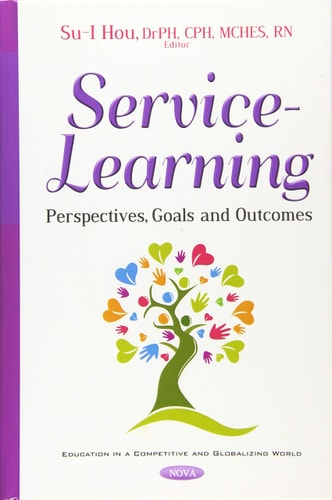
Service Learning: Perspectives, Goals and Outcomes
0
0
As an Amazon Associate and affiliate partner, Menrva Books earns from qualifying purchases. Learn more
Author Description
The authors examine samples of experimental learning programs in higher education to better understand the influential drivers of service-learning pedagogy, as well as potential barriers that hinder service-learning adoption in higher education settings. Service-learning is a structured learning experience that links academic course work and community service, stressing reciprocal learning and reflective practices to address community identified needs, while engaging and developing students citizenship skills and critical thinking for social change. This book discusses how service-learning projects impact students, faculty, higher education institutions, and service-learning clients through domestic and international experiences. The research methods demonstrated throughout this text include: survey research, mixed-methods research, literature reviews, quasi-experiments, and case studies. Chapters within this book evaluate the impact of service-learning projects through learning competency outcome measures or reflection analyses. We believe the empirical data and knowledge provided through this book will advance service-learning research and support the adoption/integration of service-learning opportunities in higher education settings. Moreover, we hope that future research will expand upon lessons provided in this book, to continue to build the service-learning knowledge base for faculty, students and institutions. Part I of this book provides a brief literature review of overcoming service-learning barriers in higher education, including discussion of online service-learning challenges and strategies. To offer an interdependent analysis of the service-learning approach, Parts II, III, and IV include case studies grouped by what may be considered the three primary stakeholder groups: Faculty, Students and Institutions. Part II: Faulty will provide detailed analyses of faculty, both tenure-track and off-tenure track, encountered issues and considerations regarding
Menrva's Summary
THE THESIS
This book investigates the core components of service-learning pedagogy, exploring its goals, outcomes, and the factors that influence its implementation in higher education. The authors analyze experimental learning programs to understand the drivers and barriers of service-learning, which is defined as a structured experience linking academic coursework with community service to foster reciprocal learning, reflective practices, and student development in citizenship and critical thinking. The text examines the impact of service-learning projects on students, faculty, institutions, and community clients through various domestic and international case studies, employing research methods such as surveys, mixed-methods, literature reviews, quasi-experiments, and case studies to evaluate learning outcomes and reflection.
THE SCOPE MAP
- Literature review on overcoming service-learning barriers in higher education, including online challenges.
- Detailed analyses of faculty experiences with service-learning, covering both tenure-track and off-tenure track positions.
- Case studies focusing on student perspectives and impacts of service-learning projects.
- Examination of institutional roles and considerations in implementing service-learning.
- Evaluation of learning competency outcome measures and reflection analyses from service-learning projects.
- Discussion of domestic and international service-learning experiences.
- Application of research methods including survey research, mixed-methods research, literature reviews, quasi-experiments, and case studies.
THE AUTHORITY PERSPECTIVE
The book aims to advance service-learning research by providing empirical data and knowledge to support its adoption in higher education settings. It is structured to offer an interdependent analysis of the service-learning approach, with dedicated sections for faculty, students, and institutions. The authors express hope that future research will build upon the lessons presented, contributing to a growing knowledge base for all stakeholders involved in service-learning.
Page Count:
152
Publication Date:
2017-01-01
Publisher:
Nova Science Publishers, Incorporated
ISBN-10:
1536108790
ISBN-13:
9781536108798
Self-help
Non-Fiction
Higher Education
Research Methods
Pedagogy
Community Engagement
Community Tags
Similar Books