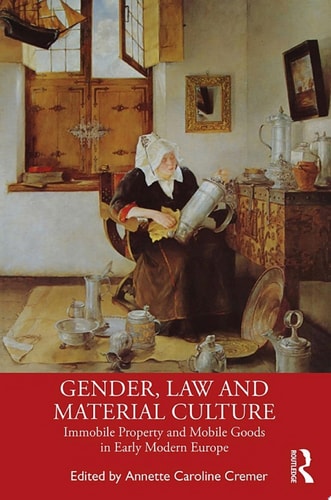
Gender, Law and Material Culture
0
0
As an Amazon Associate and affiliate partner, Menrva Books earns from qualifying purchases. Learn more
Author Description
This interdisciplinary volume discusses the division of the early modern material world into the important legal, economic, and personal categories of mobile and immobile property, possession, and the rights to usufruct. The chapters describe and compare different modes of acquisition and intergenerational transfer via law and custom. The varying perspectives, including cultural history, legal history, social and economic history, philosophy, and law, allow for a more nuanced understanding of the links between the movability of an object and the gender of the person who owned, possessed, or used it. Case studies and examples come from a wide geographical range, including Norway, England, Scotland, the Holy Roman Empire, Italy, Tyrol, the Ottoman Empire, Greece, Romania, and the European colonies in Brazil and Jamaica. By covering both urban and rural areas and exploring all social groups, from ruling elites to the lower strata of society, the chapters offer fresh insight into the division of mobile and immobile property that socially and economically posed disadvantages for women. By exploring a broad scope of topics, including landownership, marriage contracts, slaveholding, and the dowry, this book is an essential resource for both researchers and students of women’s history, social and economic history, and material culture.
Page Count:
306
Publication Date:
2020-10-26
Publisher:
Taylor & Francis
ISBN-10:
100020426X
ISBN-13:
9781000204261