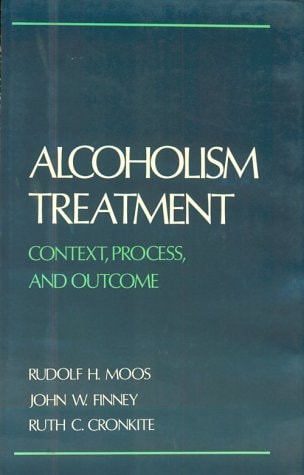
Alcoholism Treatment: Context, Process, and Outcome
0
0
As an Amazon Associate and affiliate partner, Menrva Books earns from qualifying purchases. Learn more
Author Description
Based on the authors' extensive research, this book focuses on the context, processes, and outcomes of alcoholism treatment programs. It also investigates the influence of factors such as marital status, gender, family and work environments, stressful life events, and personal coping responses on patients' functioning up to 10 years after treatment. Bridging the gap between alcoholism treatment research and the field of program evaluation, this innovative study argues for a broader approach to treatment evaluation than the commonly used black-box model. In addition, it examines the impact of alcohol abuse on spouses and children of alcoholic patients. It will prove invaluable for those working in professional and lay groups interested in alcohol and substance abuse, as well as researchers, clinical psychologists, psychiatrists, and social workers.
Menrva's Summary
THE THESIS
This book investigates how the multifaceted context of a patient's life—including social, environmental, and personal factors—shapes the long-term efficacy of alcoholism treatment programs. The authors, John W. Finney, Rudolf H. Moos, and Ruth C. Cronkite, utilize extensive longitudinal research to challenge the traditional 'black-box' model of program evaluation. By analyzing patient functioning up to a decade post-treatment, they argue that clinical success is inextricably linked to external stressors and internal coping mechanisms rather than treatment intervention alone.
THE SCOPE MAP
What You Will Find
- Longitudinal data tracking patient outcomes over a ten-year period post-treatment.
- An analytical framework for evaluating treatment programs beyond simple success or failure metrics.
- Examination of environmental influences including marital status, family dynamics, and work environments.
- Assessment of the secondary impact of alcohol abuse on spouses and children.
THE AUTHORITY PERSPECTIVE
Experts recognize this work as a foundational text for clinicians and researchers seeking to understand the systemic variables that influence recovery. Readers frequently note the academic density of the prose, which provides a rigorous, evidence-based approach to substance abuse program evaluation.
Page Count:
304
Publication Date:
1990-06-21
Publisher:
Oxford University Press
ISBN-10:
0195043626
ISBN-13:
9780195043624
Psychology
Medicine
Addiction
Social Work
Public Health
Alcoholism treatment
Community Tags
Similar Books