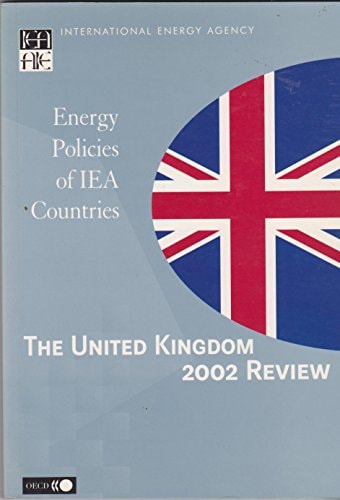
Energy Policies of IEA Countries: United Kingdom 2002 Review
0
0
As an Amazon Associate and affiliate partner, Menrva Books earns from qualifying purchases. Learn more
Author Description
The International Energy Agency's 2002 review of the UK's energy policies and programmes. It finds that the UK energy sector has performed remarkably well during the 1990s. The gas and electricity markets opened up to competition. Real gas and electricity prices fell. Domestic natural gas replaced coal in the power industry, and carbon dioxide emissions and air pollution declined as a result. Increased oil and gas production on the UK continental shelf has contributed significantly to these developments. Central to the success of the energy sector however, was a readiness to adjust policies and regulatory measures when shortcomings became apparent. The last major adjustment was the introduction of the New Electricity Trading Rules in March 2001. These rules provided the decisive step towards a fully competitive power market. Thanks to energy market reform and the resulting "dash for gas" in power generation, the UK is likely to meet its 12.5% greenhouse gas reduction target under the Kyoto Protocol. But the country has a national target to reduce carbon dioxide emissions by 20% below 1990 levels by 2010. Meeting this target will require extra efforts. In the gas market, capacity auctions at the St. Fergus entry point into the UK's onshore pipeline system have fetched very high bid prices in recent years. This has revealed bottlenecks at the St. Fergus terminal and farther afield. But so far the high prices have not resulted in capacity expansion. The regulatory regime may have to be adjusted to give stronger incentives for new pipeline construction.
Menrva's Summary
THE THESIS
The United Kingdom's energy sector has undergone significant transformation and achieved notable successes in the 1990s, but faces challenges in meeting future environmental targets. The review details the opening of gas and electricity markets to competition, leading to price reductions and a shift from coal to natural gas in power generation, which in turn reduced CO2 emissions and air pollution. Increased domestic oil and gas production has also been a key factor. The success is attributed to a flexible policy approach, exemplified by the New Electricity Trading Rules introduced in 2001, which facilitated a competitive power market and helped the UK move towards its Kyoto Protocol greenhouse gas reduction target.
THE SCOPE MAP
- Analysis of the UK's energy sector performance throughout the 1990s.
- Review of the liberalization of gas and electricity markets.
- Impact of market competition on real energy prices.
- The transition from coal to natural gas in power generation and its environmental benefits.
- Contribution of UK continental shelf oil and gas production.
- Examination of policy adjustments and regulatory measures, including the New Electricity Trading Rules.
- Assessment of the UK's progress towards Kyoto Protocol greenhouse gas reduction targets.
- Identification of challenges in meeting the national target for carbon dioxide emission reduction and potential solutions for gas market bottlenecks.
THE AUTHORITY PERSPECTIVE
This review from the International Energy Agency assesses the United Kingdom's energy policies and programs, highlighting the sector's strong performance in the 1990s due to market liberalization and policy adaptability. It notes the success in meeting environmental targets like those for the Kyoto Protocol, largely driven by the shift to natural gas. However, the report also points to emerging challenges, particularly concerning infrastructure bottlenecks in the gas market and the need for further efforts to achieve more ambitious national emission reduction goals.
Page Count:
154
Publication Date:
2002-01-01
Publisher:
OECD
ISBN-10:
9264197702
ISBN-13:
9789264197701
Politics
Economics
Non-Fiction
Energy policy
United Kingdom
Community Tags
Similar Books