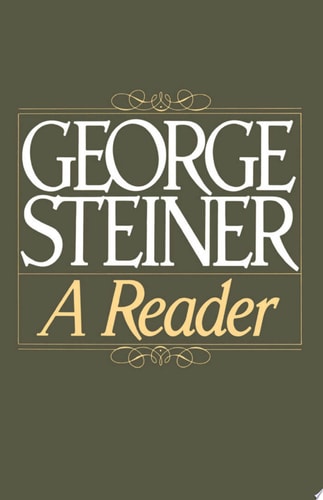
George Steiner: A Reader
0
0
As an Amazon Associate and affiliate partner, Menrva Books earns from qualifying purchases. Learn more
Author Description
As an incisive and provocative critic of literature, language, and culture, George Steiner has acquired an international reputation and a devoted following. "He scatters bright ideas everywhere," writes The New York Times Book Review, "and they are sure to be picked up." This volume presents a rich sampling of Steiner's ideas, including selections from his seminal books The Death of Tragedy, After Babel, Tolstoy or Dostoevsky, and Language and Science. Aside from pointing to work that lies ahead, this anthology offers a rich retrospective of the intellectual ground Steiner has already covered. Whether discussing Marxist literary theory, the significance of Tolstoy, or the problems of treating sexual material in literature, Steiner's writings give us the pleasure of watching an astute and nimble mind constantly at work.
Menrva's Summary
THE THESIS
This volume investigates the intersection of language, literature, and culture through the lens of George Steiner's extensive intellectual career. George Steiner, a renowned critic and polymath, presents a curated selection of his most significant arguments regarding the nature of translation, the evolution of tragedy, and the moral responsibilities of the intellectual. By synthesizing excerpts from his major works, the book establishes a framework for understanding how literature reflects and shapes the human condition across diverse historical and political contexts.
THE SCOPE MAP
What You Will Find
- Selections from seminal texts including The Death of Tragedy and After Babel
- Analysis of Marxist literary theory and its application to canonical texts
- Comparative studies of major authors such as Tolstoy and Dostoevsky
- Examination of the ethical and linguistic challenges inherent in literary translation
THE AUTHORITY PERSPECTIVE
Critics and scholars regard this collection as a vital entry point into Steiner's dense and wide-ranging body of work. Readers frequently note the intellectual rigor of the prose, which serves as a foundational reference for those interested in the history of literary theory.
Page Count:
448
Publication Date:
1987-05-28
Publisher:
Oxford University Press
ISBN-10:
0195050681
ISBN-13:
9780195050684
Philosophy
Non-Fiction
Philology
Literature
Essays
Language
Literary Criticism
Community Tags
Similar Books