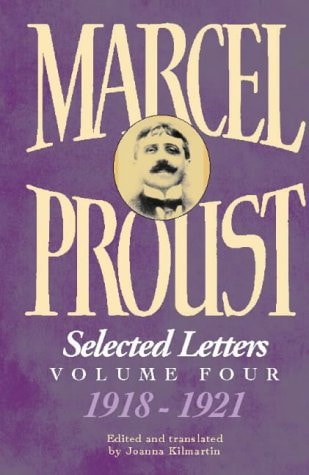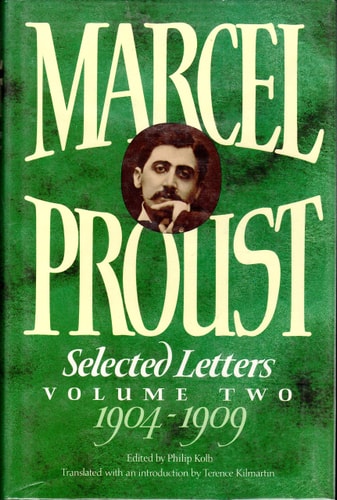
Marcel Proust: Selected Letters Volume II: 1904-1909
0
0
As an Amazon Associate and affiliate partner, Menrva Books earns from qualifying purchases. Learn more
Author Description
In 1904, while still working on his translations of Ruskin, Marcel Proust wrote to Maurice Barrès "I still have two Ruskin's to do, and after that I shall try to translate my own poor soul, if it doesn't die in the meantime." Within a few years Proust would begin this translation of his "own poor soul"--the monumental Remembrance of Things Past, one of the great literary works of the 20th century.In this volume of Proust's collected letters--translated by Terence Kilmartin, acclaimed for his work on the Moncrieff translation of Proust's works--the reader is carried inside this pivotal moment in a great writer's life. In a letter to Louis d'Albufera he lists the projects he has in hand: "a study on the nobility, a Parisian novel, an essay on Sainte-Beuve and Flaubert, an essay on Women, an essay on Pederasty (not easy to publish), a study on stained-glass windows, a study on tombstones, a study on the novel"--all subjects that eventually found their way into Remembrance of Things Past. The final letter in the volume talks of alterations to his flat "which are essential for my peace and quiet"--an allusion no doubt to the cork-lined room in which he would spend so many years continuing to pursue his quest for "Lost Time."The letters are intriguing for what they say about the work, but they also offer an intimate portrait of the man--the sometime invlaid recluse, sometime socialite. Although Proust spent a great deal of time insulated at home, when he does go out it is clear that the talent for malicious observation so evident in Guermantes Way was already quite sharp. He refers to a group of dowagers he'd seen at a concert as "portraits of monsters from the time when people didn't know how to draw." And his letters to his devoted friend the composer Reynaldo Hahn are full of wit, scurrilous gossip and a great deal of teasing. He also carries on lively exchanges with two very different women--Marie Nordlinger, a serious, dedicated artist, and Louisa de Mornand, a frivo
Menrva's Summary
THE THESIS
This volume investigates the critical transitional period in Marcel Proust's life between 1904 and 1909, documenting the intellectual and personal evolution that preceded the composition of his major work. The collection presents primary source correspondence translated by Terence Kilmartin, offering a window into the author's creative process, his social observations, and the early conceptualization of themes that would define his later literary output. By examining these letters, the reader gains insight into the intersection of Proust's private life as a recluse and his active engagement with the cultural figures of his time.
THE SCOPE MAP
What You Will Find
- Correspondence detailing the transition from Ruskin translations to original creative projects.
- Primary source evidence regarding the early development of themes later found in Remembrance of Things Past.
- Insights into the author's social life, including interactions with Reynaldo Hahn and various Parisian socialites.
- Documentation of the author's physical and psychological state, including his increasing reclusiveness and health concerns.
THE AUTHORITY PERSPECTIVE
Scholars and literary critics frequently cite this collection as a vital resource for understanding the biographical context of Proust's creative development. Readers often note that the prose provides a candid look at the author's wit and observational precision, making it an essential companion for those studying his major novels.
Page Count:
512
Publication Date:
1989-12-07
Publisher:
Oxford University Press
ISBN-10:
0195059611
ISBN-13:
9780195059618
Biography
Non-Fiction
Literary Criticism
Letters
European
Community Tags
Similar Books