Eric Mendelsohn's Synagogues in America
0
0
As an Amazon Associate and affiliate partner, Menrva Books earns from qualifying purchases. Learn more
Author Description
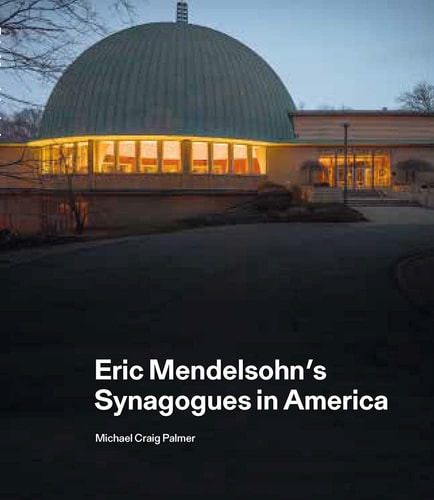
In America between 1946 and 1953, the German-Jewish architect Eric Mendelsohn planned seven synagogues, of which four were built, all in the Midwest. In this book, photographer Michael Palmer has recorded in exquisite detail Mendelsohn's four built synagogues: Saint Paul, Saint Louis, Cleveland and Grand Rapids. These photographs are accompanied by an insightful contextual essay by Ita Heinze-Greenberg which reflects on Eric Mendelsohn and his Jewish identity. Mendelsohn's post-war commitment to sacred architecture was a major challenge to him, but one on which he embarked with great enthusiasm. He sought and found radically new architectural solutions for these 'temples' that met functional, social and spiritual demands. In the post-war and post-Holocaust climate, the old references had become obsolete, while the founding of the State of Israel in 1948 posed a claim for the redefinition of the Jewish diaspora in general. The duality of Jewish and American identity became more crucial than ever and the congregations were keen to express their integration into a modern America through these buildings. Hardly anyone could have been better suited for this task than Mendelsohn, as he sought to justify his decision to move from Israel and adopt the USA as his new homeland. The places he created to serve Jewish identity in America were a crowning conclusion of his career. They became the benchmark of modern American synagogue architecture, while the design of sacred space added a new dimension in Mendelsohn's work.
Menrva's Summary
THE THESIS
The book investigates the architectural legacy of Eric Mendelsohn's American synagogues built between 1946 and 1953. The work details four of the seven synagogues Mendelsohn planned in the Midwest, meticulously recorded through the photography of Michael Palmer. Ita Heinze-Greenberg provides an essay contextualizing Mendelsohn's work, exploring his Jewish identity and the challenges of post-war sacred architecture. The synagogues represent a significant response to the redefinition of Jewish identity in America following the Holocaust and the establishment of Israel, embodying the congregations' desire to express their integration into modern American society.
THE SCOPE MAP
- Detailed photographic record of four built synagogues by Eric Mendelsohn: Saint Paul, Saint Louis, Cleveland, and Grand Rapids.
- Contextual essay by Ita Heinze-Greenberg on Eric Mendelsohn and his Jewish identity.
- Analysis of Mendelsohn's post-war commitment to sacred architecture and his innovative solutions.
- Exploration of the socio-historical context, including the post-Holocaust era and the founding of Israel.
- Discussion of the duality of Jewish and American identity as expressed through architectural design.
- Examination of how these synagogues became benchmarks for modern American synagogue architecture.
- Insight into Mendelsohn's personal journey and his decision to adopt the USA as his homeland.
THE AUTHORITY PERSPECTIVE
This book is regarded as a significant contribution to architectural history and Jewish studies, offering a detailed look at a crucial period in American synagogue design. The combination of exquisite photography and scholarly analysis provides a comprehensive understanding of Eric Mendelsohn's post-war work. The text highlights the complex interplay between religious identity, national integration, and architectural innovation in mid-20th century America. It is recognized for its thorough documentation and insightful exploration of Mendelsohn's legacy in sacred architecture.
Page Count:
216
Publication Date:
2019-01-01
Publisher:
Lund Humphries Publishers
ISBN-10:
1848222947
ISBN-13:
9781848222946
Non-Fiction
Architecture
History
American Studies
Jewish Studies
Community Tags
Similar Books