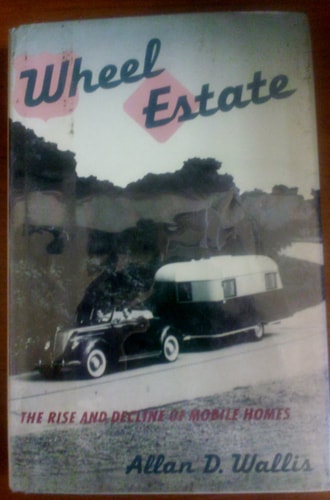
Wheel Estate: The Rise and Decline of Mobile Homes
0
0
As an Amazon Associate and affiliate partner, Menrva Books earns from qualifying purchases. Learn more
Author Description
Mobile homes--or manufactured housing, as they are called today--provide shelter for more than twelve and a half million Americans, and in the last two decades have accounted for one quarter of all new single family housing produced annually. Yet they have been attacked as unsafe and unsatisfactory, and critics have argued that they should be banned or restricted. But to Allan Wallis, the mobile home embodies many of the most fundamental American ideals of home and community.In Wheel Estate, Allan Wallis offers a lively and informative history of this much-maligned form of housing over six decades. He begins with the travel trailers of the late 1920s and 1930s, describing models that were built like yachts or unfolded like Polaroid cameras. With the Second World War, Wallis writes, the industry mushroomed as trailers became homes for thousands of defense workers; he vividly portrays the communities they lived in and the trailer houses that were turned out under government contract. After the war, severe housing shortages sustained demand for trailers as year-round housing. The industry responded with new models--now called mobile homes--that tried to strike a balance between house and vehicle, even as owners built their own often fanciful additions (including one mobile home complete with Egyptian pylons). The results, illustrated in Wheel Estate, were sometimes comic, but they revealed what Americans thought their housing ought to look like.The need for mobile homes today has only grown as the housing crisis continues to deepen. Wallis reviews recent efforts to remove barriers against the use of manufactured housing and to assure construction quality, and he discusses how some of these efforts have backfired, making mobile homes less affordable. Wallis argues that, despite moves to restrict mobile homes, they remain a useful and distinctively American form of housing. This colorful account, extensively illustrated with period photographs and vivid portraits of the
Menrva's Summary
THE THESIS
This book investigates the historical evolution and social perception of mobile homes, questioning why a vital form of American housing remains subject to intense stigma and restrictive regulation. Allan D. Wallis, an expert in housing history and urban design, utilizes a blend of archival research, industry analysis, and cultural observation to trace the trajectory of manufactured housing. He argues that mobile homes represent a distinctively American approach to domesticity and community, often clashing with traditional zoning and architectural expectations.
THE SCOPE MAP
What You Will Find
- A chronological history of mobile homes from 1920s travel trailers to modern manufactured housing.
- Analysis of the impact of World War II on trailer production and defense worker housing.
- Examination of the tension between mobile home affordability and government regulatory efforts.
- Documentation of the cultural and aesthetic evolution of trailer design and owner-built additions.
THE AUTHORITY PERSPECTIVE
Experts recognize this work as a foundational text for understanding the intersection of housing policy and American cultural identity. Readers frequently note the balance between technical industry history and the social narrative of the people who reside in these homes.
Page Count:
304
Publication Date:
1991-01-17
Publisher:
Oxford University Press
ISBN-10:
0195061837
ISBN-13:
9780195061833
History
Architecture
Housing
urban planning
Sociology
American Studies
Mobile Homes
Community Tags
Similar Books