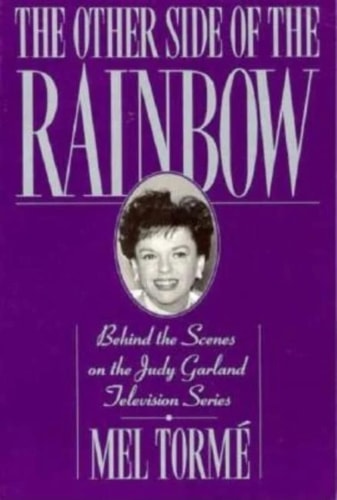
The Other Side of the Rainbow: Behind the Scenes on the Judy Garland Television Series
0
0
As an Amazon Associate and affiliate partner, Menrva Books earns from qualifying purchases. Learn more
Author Description
"The Judy Garland Show," which aired Sunday nights at nine on CBS twenty-six times between June 1963 and March 1964, was the last glimmer of a fading star. As Dorothy in The Wizard of Oz Judy Garland had charmed the world, singing and dancing down a golden path to fame; now she was middle-aged and wracked with personal problems, habitually late for rehearsals, often not showing up at all. When she made what proved to be her final appearance on Stage 43 in Television City (dressed, rather ironically, as a clown), one stagehand, assessing her thin and haggard figure, sighed "no more yellow-brick road."In The Other Side of the Rainbow--now reissued with a new preface--Mel Torme takes us on a Hollywood roller-coaster ride through the triumphs and disasters of this short-lived show, at the same time revealing a personal side of Judy Garland rarely glimpsed. While she was notoriously hard to work with, and her affection for "the Blue Lady" (Blue Nun leibfraumilch), vodka, and pills was well-known even at this time, Torme shows that Judy was still capable of breathtaking performances, that she could still earn the sobriquet "High Priestess of the entertainment world."Torme signed on to "The Judy Garland Show" as its musical director, writing special tunes, putting together medleys, at times even coaching Judy from an off-camera position. He was there from the start, survived an almost total purge of show staff, and left just before the final telecast. Consequently, we see it all from center stage: Mickey Rooney saving a virtually unrehearsed early show from failure, Lena Horne storming over Judy's lack of professionalism, Cary Grant refusing to do his oft-imitated "JU-dy, JU-dy, JU-dy" (insisting he had never said it), daughter Liza Minelli singing a duet with her beaming mother, and Judy herself, alone on the set, belting out a powerfully moving rendition of "The Battle Hymn of the Republic" only weeks after the assassination of JFK.
Menrva's Summary
THE THESIS
This book investigates the chaotic production of the 1963-1964 Judy Garland television series to understand the decline of a legendary performer. Mel Tormé, a renowned musician and the show's musical director, utilizes his direct involvement and personal observations to document the professional and personal struggles that plagued the production. He presents a detailed account of the logistical failures, the star's erratic behavior, and the high-stakes environment of mid-century network television.
THE SCOPE MAP
What You Will Find
- A chronological account of the production of The Judy Garland Show on CBS.
- First-hand observations of Judy Garland's professional conduct and personal challenges during the 1960s.
- Anecdotes involving high-profile guest stars including Mickey Rooney, Lena Horne, and Cary Grant.
- Insights into the technical and creative demands of live television production in the early 1960s.
THE AUTHORITY PERSPECTIVE
Critics and readers often cite this work as a primary source for understanding the complexities of Judy Garland's later career. The text is valued for its candid, insider perspective on the pressures of celebrity and the realities of television production during that era.
Page Count:
190
Publication Date:
1991-10-24
Publisher:
Oxford University Press
ISBN-10:
0195072952
ISBN-13:
9780195072952
Memoir
Music
Biography
Television history
Entertainment
Community Tags
Similar Books