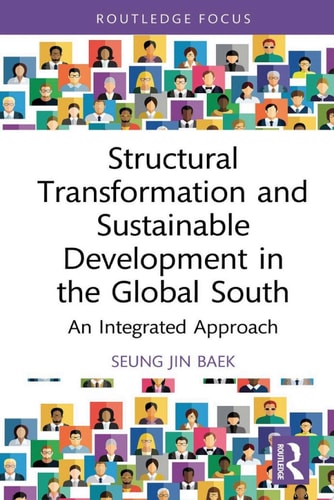
Structural Transformation and Sustainable Development in the Global South
0
0
As an Amazon Associate and affiliate partner, Menrva Books earns from qualifying purchases. Learn more
Author Description
This book investigates the relationship between sustainable development and structural transformation within international development policy. On the one hand, sustainable development is promoted as a multi-dimensional concept for achieving environmentally and socially responsible change. On the other hand, structural transformation refers to a sustained period of growth in living standards and incomes that brings sectoral change. For some, these two objectives seem at odds with each other, but this book argues that incorporating environmental initiatives into structural transformation goals in lower-income countries actually results in better results than strategies prioritising economic growth. Drawing on extensive structural equation modelling and original analysis, the book presents an innovative inclusive sustainable development framework to demonstrate the benefits of a more integrated approach to development planning, aiming for structural transformation in line with inclusive sustainable development principles. This book will be of interest to students and researchers of global development, and to policymakers within government and development organizations.
Menrva's Summary
THE THESIS
This book investigates the complex interplay between structural transformation and sustainable development within international development policy. The author addresses the perceived conflict between achieving environmentally and socially responsible change (sustainable development) and the pursuit of sustained growth in living standards and incomes through sectoral change (structural transformation). The book posits that integrating environmental initiatives into structural transformation goals in lower-income countries yields superior outcomes compared to strategies solely prioritizing economic growth, presenting an innovative inclusive sustainable development framework.
THE SCOPE MAP
- The relationship between sustainable development and structural transformation in international development policy.
- An analysis of the potential conflict between environmental/social responsibility and economic growth.
- An argument for the benefits of integrating environmental initiatives into structural transformation goals in lower-income countries.
- An innovative inclusive sustainable development framework.
- Demonstration of the benefits of an integrated approach to development planning.
- Structural equation modelling and original analysis as methodologies.
- Relevance for students and researchers of global development and policymakers.
THE AUTHORITY PERSPECTIVE
This book is positioned as a significant contribution to the discourse on development economics and policy, particularly for its focus on the Global South. The author's argument for integrating environmental considerations into structural transformation is presented as a novel approach to achieving more effective and equitable development outcomes. The methodology, employing extensive structural equation modelling and original analysis, suggests a rigorous and data-driven examination of the subject matter. It is intended to inform both academic study and practical policymaking in the field of international development.
Page Count:
148
Publication Date:
2021-12-24
Publisher:
Taylor & Francis
ISBN-10:
1000551199
ISBN-13:
9781000551198
Science & Technology
Non-Fiction
Economics
Sustainability
Community Tags
Similar Books