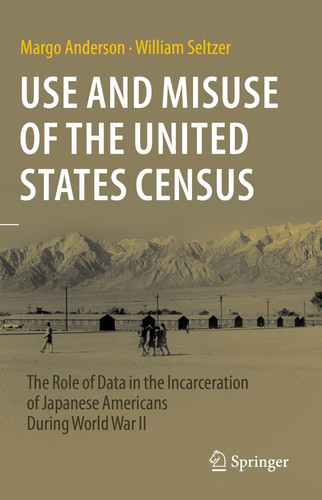
Use and Misuse of the United States Census The Role of Data in the Incarceration of Japanese Americans During World War II
0
0
As an Amazon Associate and affiliate partner, Menrva Books earns from qualifying purchases. Learn more
Author Description
The U.S. government conducts a population census every 10 years, adds up the counts by geographic location, and uses the resulting numbers in formulas to allocate seats in the House of Representative and Electoral College, and to make public funding and tax decisions. It has served as an essential tool of representative democracy since 1790. The raw data from the census also serve as a decennial snapshot of the nation, a very long list, organized by household, ideally of all people resident on census day, with additional information on the name, age, race, sex, geographic location, and other characteristics for each individual. Americans recognized early in their history that the raw data, the list, could serve additional governmental functions, and over the centuries, erected guardrails to prevent improper use. They are encapsulated in the presidential proclamations announcing the upcoming census. The information collected from individual households is for aggregated use only, and cannot be used for the “taxation, regulation, or investigation” of individual persons or businesses. Americans have heeded the call to “stand up and be counted.” They also engage in an ongoing conversation to make sure that the information is used properly and ethically, that the census serves as a tool of representative democracy and advances the rights – including human rights -- of all Americans. The record, however, reveals that there have been failures to meet this goal and that as a result the information provided by the responding public sometimes has been misused, causing considerable harm to vulnerable individuals, groups and entities. Today, as governments and social media are suspect for their exploitation of data about individuals, the experience of Americans of Japanese ancestry in the United States during World War II provides a chilling example of such misuse of census data. This book reveals how census officials stepped beyond their normal roles as
Page Count:
230
Publication Date:
2024-01-03
Publisher:
Springer Nature Switzerland
ISBN-10:
3031386183
ISBN-13:
9783031386183
Community Tags
Reader Comments
Share Your Thoughts
No comments yet. Be the first to share your thoughts!