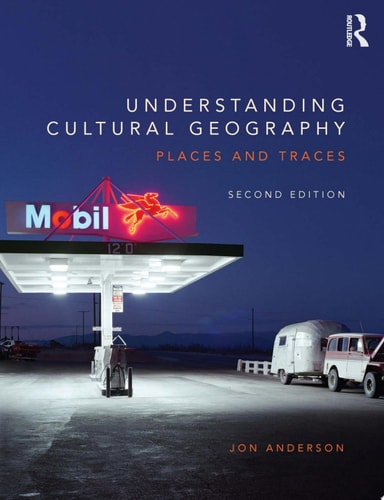
Understanding Cultural Geography: Places and Traces
0
0
As an Amazon Associate and affiliate partner, Menrva Books earns from qualifying purchases. Learn more
Author Description
Understanding Cultural Geography: Places and Traces offers a comprehensive introduction to perhaps the most exciting and challenging area of human geography. By focusing on the notion of ‘place’ as a key means through which culture and identity is grounded, the book showcases the broad range of theories, methods and practices used within the discipline. This book not only introduces the reader to the rich and complex history of cultural geography, but also the key terms on which the discipline is built. From these insights, the book approaches place as an ‘ongoing composition of traces’, highlighting the dynamic and ever-changing nature of the world around us. The second edition has been fully revised and updated to incorporate recent literature and up-to-date case studies. It also adopts a new seven section structure, and benefits from the addition of two new chapters: Place and Mobility, and Place and Language. Through its broad coverage of issues such as age, race, scale, nature, capitalism, and the body, the book provides valuable perspectives into the cultural relationships between people and place. Anderson gives critical insights into these important issues, helping us to understand and engage with the various places that make up our lives. Understanding Cultural Geography is an ideal text for students being introduced to the discipline through either undergraduate or postgraduate degree courses. The book outlines how the theoretical ideas, empirical foci and methodological techniques of cultural geography illuminate and make sense of the places we inhabit and contribute to. This is a timely update on a highly successful text that incorporates a vast foundation of knowledge; an invaluable book for lecturers and students.
Menrva's Summary
THE THESIS
This book investigates how the concept of 'place' serves as a fundamental lens through which culture and identity are understood and constructed. It explores the diverse theories, methods, and practices employed in cultural geography, tracing the discipline's rich history and defining its core terminology. The text posits place as an 'ongoing composition of traces,' emphasizing the dynamic nature of our surroundings. The second edition is updated with recent scholarship and case studies, featuring new chapters on 'Place and Mobility' and 'Place and Language,' and examines critical issues like age, race, scale, nature, capitalism, and the body to illuminate the cultural relationships between people and place.
THE SCOPE MAP
- Introduction to the theories, methods, and practices of cultural geography.
- Exploration of 'place' as a grounding for culture and identity.
- Overview of the history and key terms of cultural geography.
- Concept of place as an 'ongoing composition of traces'.
- Updated case studies and recent literature.
- New chapters on 'Place and Mobility' and 'Place and Language'.
- Analysis of issues such as age, race, scale, nature, capitalism, and the body.
- Examination of the cultural relationships between people and place.
THE AUTHORITY PERSPECTIVE
This revised edition of Understanding Cultural Geography is presented as a comprehensive and up-to-date introduction to the field, suitable for both undergraduate and postgraduate students. The text aims to illuminate how the theoretical, empirical, and methodological aspects of cultural geography help make sense of the places we inhabit. It is positioned as a valuable resource for students and lecturers, building upon a strong foundation of knowledge with contemporary insights and case studies.
Page Count:
334
Publication Date:
2015-03-24
Publisher:
Routledge
ISBN-10:
1317821394
ISBN-13:
9781317821397
Politics
Non-Fiction
History
Academic
Human Geography
Identity
Community Tags
Similar Books