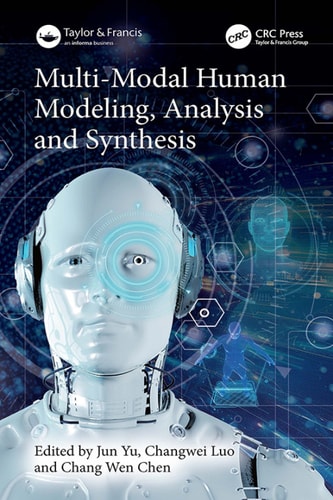
Multi-Modal Human Modeling, Analysis and Synthesis
0
0
As an Amazon Associate and affiliate partner, Menrva Books earns from qualifying purchases. Learn more
Author Description
In today’s world, where intelligent technologies are deeply transforming human-computer interaction and virtual reality, multi-modal human modeling, analysis and synthesis have become central topics in computer vision. As application scenarios grow increasingly complex, new technologies continue to emerge to address these challenges. These techniques demand systematic summarization and practical guidance. To meet this need, Multi-Modal Human Modeling, Analysis and Synthesis aims to adopt a structured perspective, building a comprehensive technical framework for multi-modal human modeling, analysis and synthesis—progressing from local details to holistic perspectives, and from face features to body dynamics. This book begins by examining the anatomy structures and characteristics of human faces and bodies, then analyzes how traditional methods and deep learning approaches provide robust optimization solutions for modeling. For example, it explores how to address challenges in face recognition caused by lighting changes, occlusions, face expressions and aging, as well as methods for body localization, reconstruction, recognition and anomaly detection in multi-modal scenarios. It also explains how multi-modal data can drive realistic face and body synthesis. A standout feature is its focus on Huawei’s MindSpore framework, bridging the gap between algorithms and engineering through practical case studies. From building face detection and recognition pipelines with the MindSpore toolkit to accelerating model training via automatic parallel computing, and solving large language model (LLM) training challenges, each step is supported by reproducible code and design logic. Designed for researchers and engineers in computer vision and AI, this book balances theoretical foundations with industry-ready technical details. Whether you aim to enhance the reliability of biometric recognition, explore creative possibilities in virtual-real interactions or optimize the deployment of
Menrva's Summary
THE THESIS
This book investigates the complex field of multi-modal human modeling, analysis, and synthesis, crucial for advancing intelligent technologies in human-computer interaction and virtual reality. The author, Jun Yu, addresses the growing need for systematic summarization and practical guidance in this rapidly evolving area. The book progresses from local details to holistic perspectives, examining anatomical structures, traditional and deep learning approaches for modeling, and challenges such as lighting changes, occlusions, and aging in face recognition, as well as body localization and reconstruction. It also details how multi-modal data can drive realistic face and body synthesis, with a strong emphasis on practical application using Huawei's MindSpore framework.
THE SCOPE MAP
- Analysis of anatomical structures and characteristics of human faces and bodies.
- Exploration of traditional and deep learning methods for robust modeling optimization.
- Addressing challenges in face recognition (lighting, occlusion, expression, aging).
- Methods for body localization, reconstruction, recognition, and anomaly detection.
- Techniques for realistic face and body synthesis using multi-modal data.
- Practical case studies utilizing Huawei's MindSpore framework.
- Building face detection and recognition pipelines with the MindSpore toolkit.
- Accelerating model training via automatic parallel computing and solving LLM training challenges.
THE AUTHORITY PERSPECTIVE
The book is designed for researchers and engineers in computer vision and AI, aiming to bridge theoretical foundations with industry-ready technical details. Its focus on practical application through case studies and reproducible code, particularly within the MindSpore framework, suggests it will be a valuable resource for those seeking to implement advanced human modeling techniques. The inclusion of topics like biometric recognition, virtual-real interactions, and LLM training indicates a broad scope relevant to current industry demands. The structured approach, moving from fundamental anatomy to complex synthesis and engineering applications, positions it as a comprehensive guide for professionals in the field.
Page Count:
0
Publication Date:
2025-10-21
Publisher:
Taylor & Francis
ISBN-10:
1040409814
ISBN-13:
9781040409817
Science & Technology
Non-Fiction
Machine Learning
Biometrics
Computer Vision
Community Tags
Similar Books