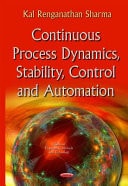
Process Instrumentation, Control, and Dynamics
0
0
As an Amazon Associate and affiliate partner, Menrva Books earns from qualifying purchases. Learn more
Author Description
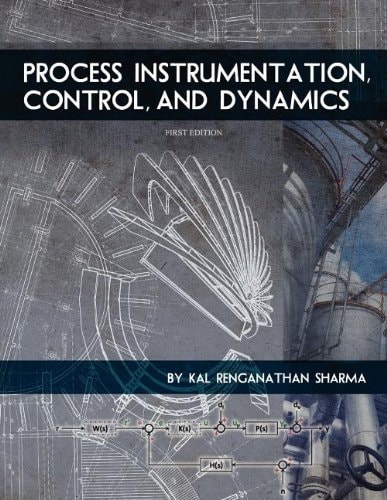
Process Instrumentation, Control and Dynamics is a class-tested text for chemical engineering students. The material incorporates life science, and relates complex concepts in chemical engineering to real-world events such as the Deepwater Horizon oil spill and the shutdown of the Fukushima nuclear power plant in Japan. The text also demonstrates how complex engineering concepts relate to everyday life through examples as diverse as the torque control of the agitator in an automatic washing machine, to the absorption of beer and the effect this has on the human brain. Both original and comprehensive, the book covers a wide range of topics within the field, including: -Single and multiple compartment models -The occurrence of multiplicity in model solutions -Control types, i.e. feedback, feed-forward, internal, ratio and estimation -Stability types including stable, integrating and inverse -Instruments such as thermocouples, pressure transducers, viscometers and tonometers The book provides an extensive amount of detailed information in a knowledgeable, yet practical way. Kal Renganathan Sharma serves as Adjunct Professor of Chemical Engineering at the Roy G. Perry College of Engineering at Prairie View A&M University. He received his B.Tech. from the Indian Institute of Technology (1985, Chennai, India) and his MS and Ph.D degrees from West Virginia University (1987, 1990, Morgantown, WV). All three degrees are in chemical engineering. Dr. Sharma is the author of 10 books, 4 book chapters, 21 journal articles, 528 conference papers and 108 other presentations. He is the recipient of several prestigious honors and awards, including the Outstanding Student of the Penultimate Year from the Rev. Brothers of St. Gabriel at RSK Higher Secondary School (Trichy, India) and an Honorary Fellowship from the Australian Institute of High Energetic Materials (Melbourne, Australia).
Menrva's Summary
THE THESIS
This text investigates the fundamental principles of process instrumentation, control, and dynamics within chemical engineering. It aims to bridge complex theoretical concepts with practical, real-world applications, drawing examples from significant industrial events like the Deepwater Horizon oil spill and the Fukushima nuclear disaster, as well as everyday phenomena such as the mechanics of a washing machine and the physiological effects of alcohol. The book is structured to provide a comprehensive understanding of modeling, control strategies, and instrument functionality.
THE SCOPE MAP
- Single and multiple compartment models
- The occurrence of multiplicity in model solutions
- Control types: feedback, feed-forward, internal, ratio, and estimation
- Stability types: stable, integrating, and inverse
- Instruments: thermocouples, pressure transducers, viscometers, and tonometers
- Applications relating chemical engineering to life sciences and everyday life
THE AUTHORITY PERSPECTIVE
This textbook is designed for chemical engineering students, offering a class-tested approach to instrumentation, control, and dynamics. It distinguishes itself by integrating life science applications and relating complex engineering concepts to both major industrial incidents and common daily experiences. The book provides extensive, detailed information in a knowledgeable yet practical manner, covering a wide array of relevant topics.
Page Count:
678
Publication Date:
2012-01-30
Publisher:
Cognella, Incorporated
ISBN-10:
160927508X
ISBN-13:
9781609275082
Non-Fiction
Science
Process Control
Chemical Engineering
Community Tags
Similar Books