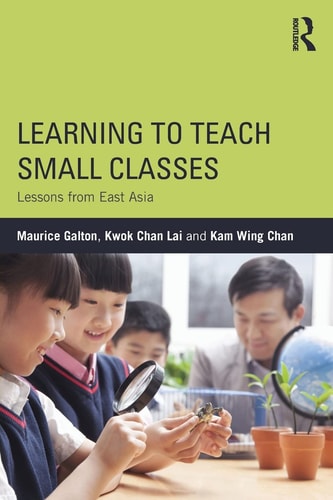
Learning to Teach Small Classes: Lessons from East Asia
0
0
As an Amazon Associate and affiliate partner, Menrva Books earns from qualifying purchases. Learn more
Author Description
The justification for smaller classes has traditionally been that students can receive more individual attention and be provided with a curriculum that promotes student centred learning. However, in Asia where student engagement is generally over 90% in primary school classrooms, the focus of smaller classes is for teachers to increase the quality of their teaching, building on the already impressive levels of student engagement. Learning to Teach Small Classes comprehensively instructs teachers on ways they can utilise the advantage of a smaller class to its fullest potential. It works through different case studies and gives examples of successful classroom practice in each of the core subject areas (Chinese, English and Mathematics). Chapters include: Setting Objectives, Asking and Answering Questions Sustaining Successful Group and Pair Work The Use of Feedback and Assessment for Developing Independence in Learning Bringing it all together and Sustaining Effective Practice With questions for discussion and further suggested reading, this book is an invaluable resource for anyone involved in small class teaching, and East Asian teaching and education policy.
Menrva's Summary
THE THESIS
This book investigates how teachers in East Asia leverage smaller class sizes to enhance teaching quality and student engagement. Galton, Chan, and Lai draw on extensive research and case studies from East Asia, where student engagement is already exceptionally high. The authors argue that smaller classes provide an opportunity for teachers to refine their pedagogical approaches, moving beyond simply managing student numbers to actively improving instructional effectiveness. The book provides practical guidance and examples across core subjects like Chinese, English, and Mathematics, aiming to equip educators with strategies to maximize the benefits of reduced class sizes.
THE SCOPE MAP
- Strategies for increasing teaching quality in smaller East Asian classrooms.
- Case studies of successful classroom practices in Chinese, English, and Mathematics.
- Guidance on setting objectives and asking effective questions.
- Techniques for sustaining successful group and pair work.
- Methods for using feedback and assessment to foster student independence.
- A framework for integrating these practices into sustainable teaching approaches.
THE AUTHORITY PERSPECTIVE
The book is presented as an invaluable resource for educators involved in small class teaching, particularly those interested in East Asian educational contexts and policy. It aims to provide practical, actionable advice grounded in successful regional practices. The inclusion of discussion questions and further reading suggests a pedagogical intent, positioning it as a professional development tool for teachers and administrators.
Page Count:
189
Publication Date:
2014-01-01
Publisher:
Routledge
ISBN-10:
0415831547
ISBN-13:
9780415831543
Non-Fiction
Self-help
Education
Teaching Methods
Asian Studies
Pedagogy
Community Tags
Similar Books