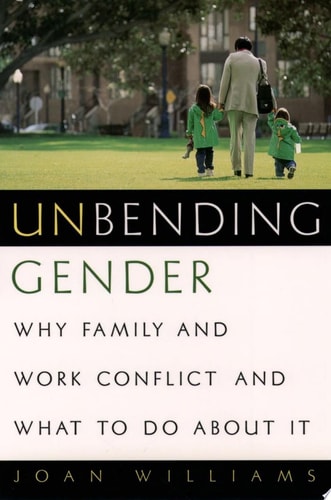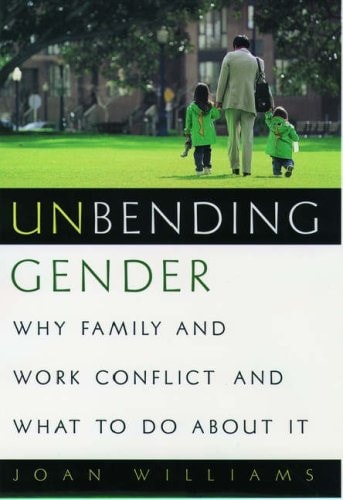
Unbending Gender: Why Family and Work Conflict and What To Do About It
0
0
As an Amazon Associate and affiliate partner, Menrva Books earns from qualifying purchases. Learn more
Author Description
In Unbending Gender, Joan Williams takes a hard look at the state of feminism in America. Concerned by what she finds--young women who flatly refuse to identify themselves as feminists and working-class and minority women who feel the movement hasn't addressed the issues that dominate their daily lives--she outlines a new vision of feminism that calls for workplaces focused on the needs of families and, in divorce cases, recognition of the value of family work and its impact on women's earning power.Williams notes that good jobs in America are designed for the ideal employee, who works full-time and often overtime, with no career interruptions. Even today, most American mothers do not meet this ideal: a majority do not work full-time, and only a small fraction work overtime. Williams points out that women will never achieve equality until mothers do: she argues that employers need to implement parent-supportive policies--or face liability for sex discrimination. She also maintains that ideal-worker fathers are supported by a flow of family work from mothers, yet divorce courts treat the family wage as owned solely by the ideal worker. The result is the impoverishment of women and children, who comprise the bulk of the poor in the United States.Unbending Gender questions the idea that women simply choose between staying at home with their children or going to work. Given the limited options that contemporary American culture allows them, mothers are forced to make compromises. Joan Williams' solution is an inclusive, family-friendly feminism that supports both mothers and fathers as caregivers and as workers.
Menrva's Summary
THE THESIS
How can American society restructure the workplace and legal systems to resolve the inherent conflict between professional demands and family responsibilities? Joan C. Williams, a distinguished law professor and expert on work-family issues, utilizes legal analysis, economic data, and sociological research to challenge the 'ideal worker' norm. She argues that current workplace structures and divorce laws systematically disadvantage mothers, and she proposes a new framework for feminism that prioritizes family-supportive policies and the economic recognition of caregiving labor.
THE SCOPE MAP
What You Will Find
- Analysis of the 'ideal worker' model and its impact on career progression.
- Legal arguments regarding sex discrimination and employer liability for parent-unsupportive policies.
- Examination of divorce law and the economic devaluation of domestic labor.
- Proposals for a more inclusive, family-friendly feminist agenda.
THE AUTHORITY PERSPECTIVE
Experts and scholars in gender studies and labor law frequently cite this work as a foundational text for understanding the structural barriers facing working parents. Readers often note the academic rigor of the legal arguments while appreciating the author's clear articulation of how policy changes can address systemic inequality.
Page Count:
352
Publication Date:
1999-11-18
Publisher:
Oxford University Press
ISBN-10:
0195094646
ISBN-13:
9780195094640
Economics
Sex Role
Gender Studies
Workplace Culture
Psychological aspects
Feminism
Work
Sociology
Family Law
Community Tags
Similar Books