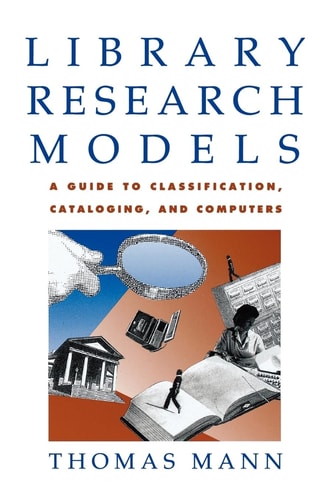
Library Research Models: A Guide to Classification, Cataloging, and Computers
0
0
As an Amazon Associate and affiliate partner, Menrva Books earns from qualifying purchases. Learn more
Author Description
Most researchers, even with computers, find only a fraction of the sources available to them. As Library of Congress reference librarian Thomas Mann explains, researchers tend to work within one or another mental framework that limits their basic perception of the universe of knowledge available to them. Some, for example, use a subject-disciplinary method which leads them to a specific list of sources on a particular subject. But, Mann points out, while this method allows students and researchers to find more specialized sources, it is also limiting--they may not realize that works of interest to their own subject appear within the literature of many other disciplines. A researcher looking through anthropology journals, for example, might not discover that the MLA International Bibliography provides the best coverage of folklore journals.In Library Research Models, Mann examines the several alternative mental models people use to approach the task of research, and demonstrates new, more effective ways of finding information. Drawing on actual examples gleaned from 15 years' experience in helping thousands of researchers, he not only shows the full range of search options possible, but also illuminates the inevitable tradeoffs and losses of access that occur when researchers limit themselves to a specific method. In two chapters devoted to computers he examines the use of electronic resources and reveals their value in providing access to a wide range of sources as well as their disadvantages: what people are not getting when they rely solely on computer searches; why many sources will probably never be in databases; and what the options are for searching beyond computers.Thomas Mann's A Guide to Library Research Methods was widely praised as a definitive manual of library research. Ronald Gross, author of The Independent Scholar's Handbook called it "the savviest such guide I have ever seen--bracingly irreverent and brimming with wisdom." The perfect companion volume.
Menrva's Summary
THE THESIS
This book investigates the cognitive limitations inherent in common research methodologies and proposes a more comprehensive framework for information retrieval. Thomas Mann, a veteran reference librarian at the Library of Congress, utilizes his extensive experience to analyze how researchers often restrict their own access to knowledge by adhering to singular, narrow search models. By contrasting disciplinary-based searching with broader, multi-faceted approaches, he argues that researchers must understand the structural tradeoffs of their chosen methods to avoid missing critical information. The text serves as a diagnostic tool for identifying the blind spots created by both traditional library systems and modern electronic databases.
THE SCOPE MAP
What You Will Find
- Analysis of diverse mental models used for information seeking and retrieval.
- Comparative evaluation of subject-disciplinary methods versus broader search strategies.
- Critical assessment of the limitations and advantages of electronic databases and computer-based research.
- Practical guidance on navigating the tradeoffs between different library classification and cataloging systems.
- Real-world examples derived from fifteen years of professional reference experience.
THE AUTHORITY PERSPECTIVE
Experts and academic librarians frequently cite this work as a foundational text for understanding the complexities of information literacy. Readers often note the practical, clear-eyed prose that demystifies the often-overlooked mechanics of library research.
Page Count:
268
Publication Date:
1994-12-15
Publisher:
Oxford University Press
ISBN-10:
019509395X
ISBN-13:
9780195093957
Information Science
Classification books
Education
Cataloging
Subject Cataloging
Reference
Research Methods
Community Tags
Similar Books