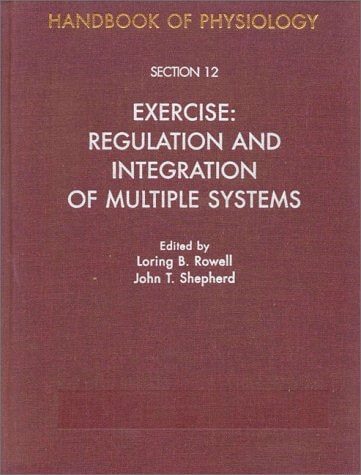
Handbook of Physiology: Section 12: Exercise: Regulation and Integration of Multiple Systems
0
0
As an Amazon Associate and affiliate partner, Menrva Books earns from qualifying purchases. Learn more
Author Description
This is the first section of the Handbook of Physiology to deal exclusively with exercise. It is also the first single volume to analyze in-depth the regulation and integration of motor, respiratory, cardiovascular and metabolic systems over the broad range of functions demanded by exercise. Its systematic examination of the regulation of these four systems draws from every area of physiology as well as from pharmacology, biochemistry, cellular and molecular biology and medicine. It highlights exercise as a uniquely powerful means of exploring the integrative aspects of whole body function.One feature of this volume is its in-depth analysis of the regulatory mechanisms responsible for the close matching of motor, respiratory, cardiovascular, and metabolic control during exercise. By combining studies of control at cellular and molecular levels with studies on whole animals, this Handbook provides the natural and logical integration that is a hallmark of physiology--and is also what lures many scientists to the study of exercise.The internationally recognized authors provide a critical analysis of the mechanisms that govern control of movement, breathing, pulmonary gas exchange, blood flow and blood pressure, and skeletal muscle metabolism. They examine both functional and structural limits to the performance of organ systems under severe stress and show how these limits can be altered by age and physical conditioning. In some cases this requires treatment of topics that have not been reviewed before such as how the heart interacts mechanically with the pericardium, lung, and chest wall to alter central hemodynamics.This volume offers a unique synthesis of fresh information and ideas about the physiology of exercise that will provide a basis for future investigations in this field. It sets a new standard for the physiological study of exercise and will be of keen interest and lasting value to physiologists, sports scientists, kinesiologists, cardiologists, motor control specialists, and those interested in the limits of human performance.
Menrva's Summary
THE THESIS
This volume investigates the complex regulatory mechanisms that allow the human body to integrate motor, respiratory, cardiovascular, and metabolic systems during physical exertion. Editors John T. Shepherd and Loring B. Rowell, both distinguished figures in the field of physiology, compile a comprehensive analysis that bridges the gap between cellular-level molecular biology and whole-body systemic function. The text argues that exercise serves as a primary diagnostic tool for understanding the limits and adaptive capabilities of human organ systems under stress.
THE SCOPE MAP
What You Will Find
- In-depth analysis of regulatory control mechanisms for motor, respiratory, cardiovascular, and metabolic systems.
- Examination of functional and structural performance limits under severe physical stress.
- Integration of data from pharmacology, biochemistry, and molecular biology to explain whole-body responses.
- Discussion of how age and physical conditioning alter physiological performance thresholds.
THE AUTHORITY PERSPECTIVE
Experts recognize this volume as a foundational reference for understanding the integrative nature of human physiology during exercise. Readers frequently note the high academic density of the prose, which is intended primarily for researchers, cardiologists, and advanced students in the medical and sports sciences.
Page Count:
1224
Publication Date:
1996-05-02
Publisher:
American Physiological Society / Oxford Univ Press
ISBN-10:
0195091744
ISBN-13:
9780195091748
Science
Physiology
Medicine
Exercise
Kinesiology
Sports Science
Cardiology
Community Tags
Similar Books


Reader Comments
Share Your Thoughts
No comments yet. Be the first to share your thoughts!