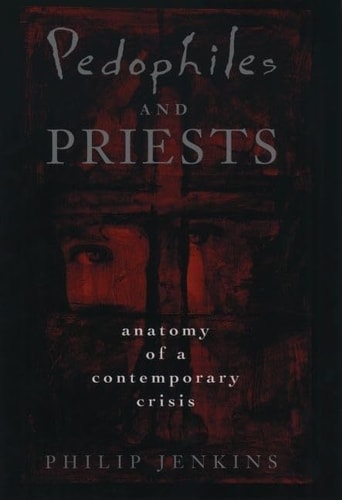
Pedophiles and Priests: Anatomy of a Contemporary Crisis
0
0
As an Amazon Associate and affiliate partner, Menrva Books earns from qualifying purchases. Learn more
Author Description
If we can believe the six o'clock news, there has been an epidemic of sexual abuse among the clergy, and especially among the Roman Catholic clergy. We have certainly seen many well-publicized cases, with front-page photos of priests led off to jail, and television interviews of parents afraid to let their children associate with clergy. But did the news media get the story right? Is there really an epidemic of clergy sex abuse? And is there, as some charge, something about the institution of the priesthood itself that attracts or creates pedophiles?Neither an expose nor an apology, Pedophiles and Priests takes a close, dispassionate look at the entire history of this mushrooming scandal, from the first rumblings to today's headlines. Philip Jenkins has written a fascinating, exhaustive, and above all even-handed account that not only puts this particular crisis in perspective, but offers an eye-opening look at the way in which an issue takes hold of the popular imagination. Jenkins argues convincingly not only that clergy sex abuse is far less widespread than the headlines suggest, but that there is nothing at all particularly Roman Catholic about the problem. What then led to the media's portrayal of a church in crisis? Jenkins begins by noting a number of factors--increased concern over the sexual abuse of children, changes in media attitudes towards the churches, the explosion in litigation in general--which combined to generate more accusations involving ministers of every denomination, with more publicity and more serious repercussions than ever before. He goes on to explore why clergy abuse came to be seen as a peculiarly Roman Catholic problem, underscoring a number of contributory factors. There is a long-standing anti-Catholic stereotype of priests as lascivious predators. The Catholic Church is a more attractive target for lawsuits than other denominations; one can sue not only the local congregation but also the archdiocese and even the national church.
Menrva's Summary
THE THESIS
This book investigates whether the reported epidemic of sexual abuse within the Roman Catholic clergy is a statistical reality or a product of media-driven moral panic. Philip Jenkins, a distinguished scholar of religion and history, utilizes a rigorous analytical framework to examine the intersection of institutional structure, legal trends, and public perception. He argues that while abuse is a serious issue, the focus on the Catholic Church as a uniquely predatory institution is largely a result of historical bias and specific litigation incentives rather than a higher prevalence of abuse compared to other denominations.
THE SCOPE MAP
What You Will Find
- Historical analysis of the development of clergy abuse scandals in the late 20th century.
- Examination of media influence and the construction of moral panics in public discourse.
- Comparative study of abuse allegations across various religious denominations.
- Analysis of legal and structural factors that make the Catholic Church a primary target for litigation.
THE AUTHORITY PERSPECTIVE
Experts recognize this work as a significant contribution to the sociology of religion and media studies, noting its commitment to statistical objectivity over sensationalism. Readers frequently highlight the author's ability to maintain a neutral, analytical tone while addressing a highly volatile and sensitive subject matter.
Page Count:
224
Publication Date:
1996-01-25
Publisher:
Oxford University Press
ISBN-10:
0195095650
ISBN-13:
9780195095654
Religion
History
Media Studies
Sociology
United States
Sexual Behavior
Criminology
Catholic Church
Child Abuse
Community Tags
Similar Books