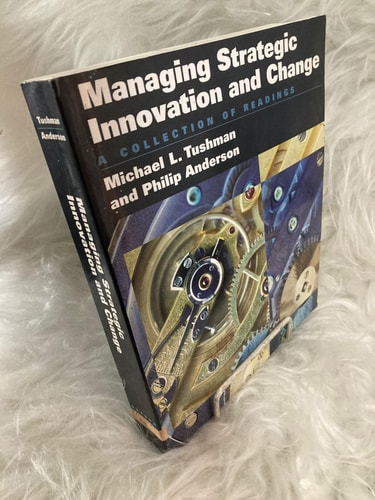
Managing Strategic Innovation and Change: A Collection of Readings
0
0
As an Amazon Associate and affiliate partner, Menrva Books earns from qualifying purchases. Learn more
Author Description
Designed for MBA and executive education programs and useful for practicing managers, this collection of readings provides a framework for thinking about how technologies evolve and drive the need for organizational change and adaptation. Focusing on the general-management challenges that innovative firms face, the editors draw from a variety of disciplines and show the links among innovation, organizational competencies, organizational architectures, executive teams, and managing change. The 41 articles have been carefully chosen from the literature; an introductory essay by the editors shows how a simple diagnostic model can be applied to the problem of managing innovation. The articles are grouped into sections according to themes, allowing instructors, students, managers, and executives to select information that best suits their needs. Themes include the nature of systems, the importance of organizational history and path dependence, the cross-functional nature of innovation management, the paradox between efficiency and adaptability, and the role of executive leadership in managing through turbulence. Readings on contemporary issues such as technological evolution, technology strategy, globalization, and organizational learning are also included. All sections in the book have editorial introductions that reinforce links among technology, organizational architectures, and executive and management teams.Managing Strategic Innovation and Change combines classic articles and cutting-edge works, providing a broad yet integrated view of the subject that brings together a diverse set of concepts which are seldom grouped together. Simultaneously timely and of enduring value, it serves as an ideal text for courses or executive seminars in managing innovation, managing technology, and strategic management.
Menrva's Summary
THE THESIS
This collection investigates how technological evolution necessitates fundamental organizational change and how managers can effectively navigate this adaptation. Editors Michael L. Tushman and Philip C. Anderson compile 41 scholarly articles to provide a diagnostic framework for general management. By integrating concepts from diverse disciplines, the text demonstrates the critical links between innovation, organizational architecture, and executive leadership in turbulent environments.
THE SCOPE MAP
What You Will Find
- A diagnostic model for assessing organizational competencies and path dependence.
- Analysis of the paradox between maintaining operational efficiency and fostering adaptability.
- Case studies and theoretical frameworks regarding technological evolution and strategy.
- Editorial introductions that synthesize cross-functional management themes and organizational learning.
THE AUTHORITY PERSPECTIVE
Experts and educators frequently identify this collection as a foundational resource for MBA curricula and executive seminars focused on strategic management. Readers often note the academic density of the prose, which provides a rigorous, multi-disciplinary perspective on the challenges of managing innovation within complex firms.
Page Count:
672
Publication Date:
1996-08-22
Publisher:
Oxford University Press
ISBN-10:
0195100115
ISBN-13:
9780195100112
Business
Strategy
Innovation
Management
Technological forecasting
Technology management
Organizational change
Community Tags
Similar Books