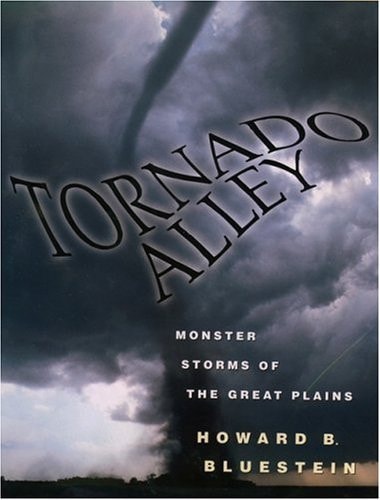
Tornado Alley: Monster Storms of the Great Plains
0
0
As an Amazon Associate and affiliate partner, Menrva Books earns from qualifying purchases. Learn more
Author Description
Tornadoes are the most violent, magnificent, and utterly unpredictable storms on earth, reaching estimated wind speeds of 300 mph and leaving swaths of destruction in their wake. In Tornado Alley, Howard Bluestein draws on two decades of experience chasing and photographing tornadoes across the Plains to present a fascinating historical account of the study of tornadoes and the great thunderstorms that spawn them.A century ago, tornado warnings were so unreliable that they were usually kept under wraps to avoid causing panic over a storm that might or might not materialize. Despite cutting-edge Doppler radar technology and computer simulation, these storms remain remarkably difficult to study. To date, no instrument designed to measure wind speed has ever survived a direct hit by a tornado. Leading scientists still conduct much of their research from the front seat of a speeding van and often contend with jammed cameras, flash floods, flying debris, and windshields smashed by hailstones. Using his own spectacular photographs, Bluestein documents the exhilaration of hair-raising encounters with as many as nine tornadoes in one day, as well as the crushing disappointment of failed expeditions and ruined equipment. Most of all, he recreates the sense of beauty, mystery, and power felt by the scientists who risk their lives to study violent storms.For scientists, amateur weather enthusiasts, or anyone who's ever been intrigued or terrified by a darkening sky, Tornado Alley provides not only a history of tornado research but a vivid look into the origin and effects of nature's most dramatic phenomena.
Menrva's Summary
THE THESIS
How do scientists effectively study the most violent and unpredictable atmospheric phenomena on Earth despite the inherent physical dangers and technological limitations? Howard B. Bluestein, a veteran meteorologist, utilizes two decades of field research and storm-chasing experience to document the evolution of tornado science. He examines the transition from early, unreliable warning systems to modern Doppler radar and computer modeling, while highlighting the persistent challenges of gathering data from within the storm environment.
THE SCOPE MAP
What You Will Find
- Historical development of tornado warning systems and meteorological observation techniques.
- Analysis of the physical mechanics behind Great Plains supercell thunderstorms.
- First-hand accounts of field research methodologies, including mobile radar deployment and storm chasing.
- Photographic documentation of storm structures and the environmental impact of extreme wind events.
THE AUTHORITY PERSPECTIVE
Experts and enthusiasts recognize this work as a significant contribution to the literature of field meteorology, balancing technical history with the visceral reality of storm chasing. Readers frequently note that the prose successfully bridges the gap between academic inquiry and the high-stakes, often dangerous, practical application of atmospheric science.
Page Count:
192
Publication Date:
1999-01-01
Publisher:
Oxford University Press
ISBN-10:
0195105524
ISBN-13:
9780195105520
Science
Nature
History
Weather
Thunderstorms
Tornadoes
Storms
Meteorology
Community Tags
Similar Books