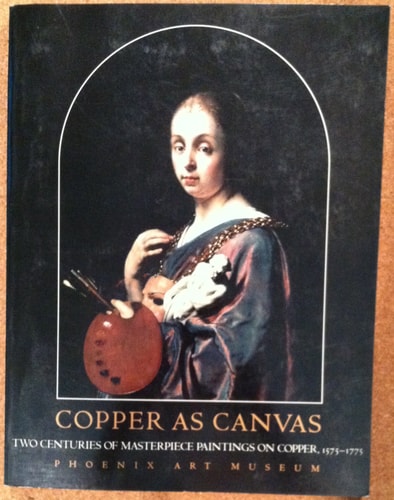
Copper as Canvas: Two Centuries of Masterpiece Paintings on Copper, 1575-1775
0
0
As an Amazon Associate and affiliate partner, Menrva Books earns from qualifying purchases. Learn more
Author Description
Later this year, approximately 100 of the most important and best-preserved examples of paintings on copper from collections in the U.S., Europe, and South America, along with displays of copper mining and copper ores, and copper objects and printing plates from the period, will be exhibited at the Phoenix Art Museum, travelling next to the Nelson-Atkins Museum of Art in Kansas City and then to the Royal Cabinet of Paintings Mauritshuis in The Hague. The artform of painting on copper dates back to the mid-sixteenth century, when European artists found that the smooth surfaces of thin sheets of copper lent themselves to fine workmanship, were easy to handle, and even gave a luminous shine to the paint. Masters including Jan Breughel the Elder, Claude, El Greco, Reni, Guercino, Rembrandt, and Vernet are among those who produced fine works on copper.Copper as Canvas brings together 100 full-color and sixty-five black and white reproductions of these paintings, each accompanied by a detailed entry, as well an interdisciplinary range of essays covering the history of painting on copper. From the history of the copper industry in Europe circa 1500-1700, to the technique's emergence in the New World colonies (particularly Mexico and Peru), to technical studies of the technique, the essays provide illuminating background information for the museum-goer. A combination of beautifully produced illustrations and fascinating reading, Copper as Canvas brings these stunning paintings to art-lovers in an impressive volume sure to have a long afterlife beyond the exhibition.
Menrva's Summary
THE THESIS
This volume investigates the historical significance and technical evolution of painting on copper plates during the sixteenth through eighteenth centuries. The Phoenix Art Museum presents a comprehensive analysis of this specialized medium, drawing upon international collections to examine how artists utilized the unique properties of copper to achieve luminosity and fine detail. The text integrates historical context with technical examination to explain why this substrate became a preferred choice for masters across Europe and the Americas.
THE SCOPE MAP
What You Will Find
- Historical analysis of the copper industry in Europe between 1500 and 1700.
- Technical studies regarding the preparation and application of paint on metal surfaces.
- Examination of the medium's adoption and adaptation within New World colonies, specifically Mexico and Peru.
- A curated catalog of 100 full-color and 65 black and white reproductions of significant works.
THE AUTHORITY PERSPECTIVE
Experts and art historians recognize this volume as a definitive resource for understanding the material culture of early modern painting. Readers frequently note the high quality of the reproductions and the scholarly depth of the interdisciplinary essays.
Page Count:
368
Publication Date:
1999-07-15
Publisher:
Oxford University Press
ISBN-10:
0195123972
ISBN-13:
9780195123975
Art
Non-Fiction
Technique
Painting
Art History
Community Tags
Similar Books