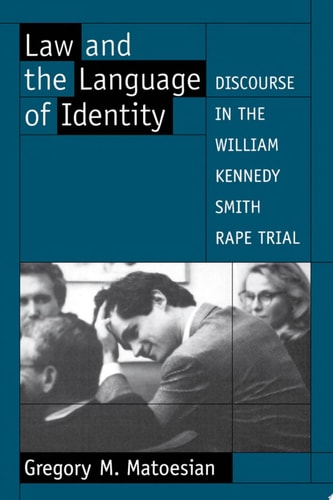
Law and the Language of Identity: Discourse in the William Kennedy Smith Rape Trial
0
0
As an Amazon Associate and affiliate partner, Menrva Books earns from qualifying purchases. Learn more
Author Description
In this volume, Gregory Matoesian uses the notorious 1991 rape trial of William Kennedy Smith to provide an in-depth analysis of language use and its role in that specific trial as well as in the law in general. He draws on the fields of conversation analysis, ethnomethodology, linguistic anthropology and social theory to show how language practices shape--and are shaped by--culture and the law, particularly in the social construction of rape as a legal fact. This analysis examines linguistic strategies from both defense and prosecutorial viewpoints, and how they relate to issues of gender, sexual identity, and power.
Menrva's Summary
THE THESIS
How does the strategic use of language within a courtroom construct the legal reality of a rape trial? Gregory M. Matoesian, a scholar in the fields of sociology and linguistics, utilizes the 1991 William Kennedy Smith trial as a primary case study to investigate the intersection of discourse, power, and legal procedure. By applying frameworks from conversation analysis and ethnomethodology, the author argues that legal facts are not objective truths but are instead actively negotiated through specific linguistic practices and social theories.
THE SCOPE MAP
What You Will Find
- Detailed analysis of trial transcripts from the 1991 William Kennedy Smith rape case.
- Application of conversation analysis and ethnomethodology to legal discourse.
- Examination of linguistic strategies employed by both defense and prosecution teams.
- Exploration of how gender, sexual identity, and power dynamics influence courtroom testimony.
THE AUTHORITY PERSPECTIVE
Experts in legal linguistics and sociology recognize this work as a significant contribution to the study of courtroom discourse. Readers frequently note the academic density of the prose, which provides a rigorous examination of how language shapes the social construction of legal outcomes.
Page Count:
280
Publication Date:
2001-09-06
Publisher:
Oxford University Press
ISBN-10:
0195123301
ISBN-13:
9780195123302
True Crime
Sociology
Linguistics
Trials Rape
Law
Semantics Law
Gender Studies
English
English & College Success
Rape
Community Tags
Similar Books