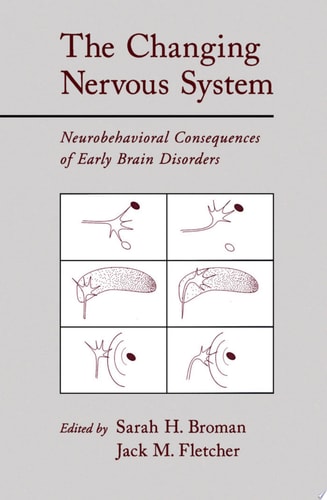
The Changing Nervous System: Neurobehavioral Consequences of Early Brain Disorders
0
0
As an Amazon Associate and affiliate partner, Menrva Books earns from qualifying purchases. Learn more
Author Description
This book provides an integrated review of current research on neural plasticity and reorganization after early cerebral insults. Addressing both animal studies and a variety of diverse clinical populations, including children with congenital brain malformations, focal lesions, autism, and pervasive developmental disorders, this book summarizes many of the major advances on neural plasticity made in these areas over the past several years. Characterized by a broad historical perspective including contributions from some of the earliest researchers on environmental factors and brain organization, the book advances the reader form the laboratory to application in several human populations. Many of the components of the book explicitly address relationships of animal and human models, showing that the laboratory and the clinic are overlapping settings, not isolated chambers as they are often perceived. The understanding of neural plasticity and both biological and environmental factors that influence brain reorganization after early cerebral insult has major implications for treatment. The book outlines many of the potential applications for treatment of early brain disorders. The contributors include basic neuroscientists, cognitive neuroscientists, and clinician-researchers who work together to bridge gaps among disciplines. The book should facilitate collaborative research and applications in the critical areas of neural plasticity and brain reorganization. Advancement of knowledge of factors that prevent and enhance brain reorganization after early cerebral insult is a key to unraveling the mysteries of the developmental disorders characteristic of children and which influence their development through adulthood.
Menrva's Summary
THE THESIS
This book investigates the mechanisms of neural plasticity and brain reorganization following early cerebral insults to determine how these biological and environmental factors influence developmental outcomes. The authors, Jack M. Fletcher and Sarah H. Broman, synthesize research from both animal models and clinical human populations to bridge the gap between laboratory findings and clinical application. By integrating perspectives from basic neuroscientists and clinician-researchers, the text provides a comprehensive framework for understanding how early brain disorders affect long-term cognitive and behavioral development. The work emphasizes that the laboratory and the clinic are interconnected environments, both essential for developing effective treatment strategies for children with congenital or acquired brain conditions.
THE SCOPE MAP
What You Will Find
- Analysis of neural plasticity in congenital brain malformations and focal lesions.
- Comparative study of animal models versus human clinical populations.
- Examination of environmental factors that influence brain reorganization.
- Clinical applications for the treatment of autism and pervasive developmental disorders.
THE AUTHORITY PERSPECTIVE
Experts recognize this volume as a significant interdisciplinary resource that successfully bridges the divide between basic neuroscience and clinical practice. Readers frequently note the academic density of the prose, which serves as a foundational text for researchers and clinicians working in pediatric neurology and developmental psychology.
Page Count:
428
Publication Date:
1999-07-15
Publisher:
Oxford University Press
ISBN-10:
0195121937
ISBN-13:
9780195121933
Psychology
Medicine
Neuroscience
Brain Diseases
Pediatrics
Community Tags
Similar Books