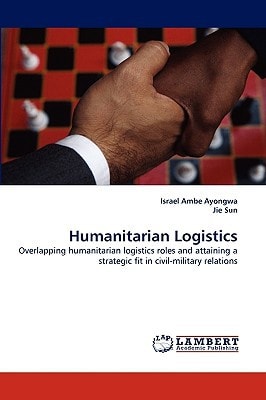
Humanitarian Logistics: Overlapping Humanitarian Logistics Roles and Attaining a Strategic Fit in Civil-military Relations
0
0
As an Amazon Associate and affiliate partner, Menrva Books earns from qualifying purchases. Learn more
Author Description
Humanitarian logistics is a complex science because actors are compelled to work with outmost speed in interrupted environments with unknown players. Even more complex are civil-military relations because as studies reveal, the differences between these two actors run deep. This work examines civil-military relations in the preparedness and response phase of humanitarian crises by developing a frame of reference, setting forth operational and theoretical definitions, examining overlapping supply chains, civil-military cooperation framework and proposing a working model. Data collection is based on two NGOs and a military task force, and this data analyzed vis-a-vis the frame of reference. From the analysis, some conclusions were drawn. First, a number of strategies are employed during the preparedness and response phase. Also, overlapping roles generate both positive and negative impact. Meanwhile, different organizational structures and funding outlay mean differences in how activities are coordinated and information shared. Lastly, cooperation, trust, information sharing and coordination are closely linked when finding a strategic fit among actors.
Menrva's Summary
THE THESIS
This work investigates the intricate dynamics of civil-military relations within humanitarian logistics during crisis preparedness and response phases. The authors develop a frame of reference, providing operational and theoretical definitions to analyze overlapping supply chains and cooperation frameworks. Through data collection from two NGOs and a military task force, the study examines the strategies employed, the dual impacts of overlapping roles, and the influence of organizational structures and funding on coordination and information sharing. Ultimately, it proposes a working model to achieve a strategic fit among these diverse actors.
THE SCOPE MAP
- Analysis of overlapping roles between humanitarian organizations and military forces in crisis response.
- Examination of civil-military cooperation frameworks and their effectiveness.
- Exploration of operational and theoretical definitions within humanitarian logistics.
- Case study data from two NGOs and a military task force.
- Discussion on the impact of organizational structures and funding on coordination.
- Identification of key factors for achieving strategic fit: cooperation, trust, information sharing, and coordination.
THE AUTHORITY PERSPECTIVE
The study offers a detailed examination of the complex interplay between civilian and military entities in humanitarian logistics, particularly focusing on the preparedness and response phases of crises. It highlights the challenges arising from differing organizational structures, operational speeds, and the presence of unknown players, while also identifying strategies for effective cooperation. The research provides a valuable framework for understanding how overlapping roles can impact outcomes and suggests that trust, information sharing, and coordination are critical for achieving a strategic fit among diverse actors in high-pressure environments.
Page Count:
92
Publication Date:
2010-01-01
Publisher:
Lap Lambert Academic Publishing GmbH KG
ISBN-10:
3838383753
ISBN-13:
9783838383750
Non-Fiction
Business
Civil-military relations
Logistics
Community Tags
Similar Books