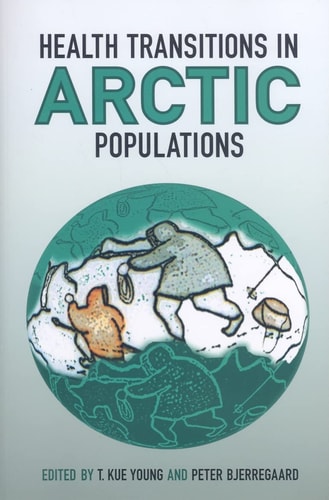
Health Transitions in Arctic Populations
0
0
As an Amazon Associate and affiliate partner, Menrva Books earns from qualifying purchases. Learn more
Author Description
The Arctic regions are inhabited by diverse populations, both indigenous and non-indigenous. Health Transitions in Arctic Populations describes and explains changing health patterns in these areas, how particular patterns came about, and what can be done to improve the health of Arctic peoples. This study correlates changes in health status with major environmental, social, economic, and political changes in the Arctic. T. Kue Young and Peter Bjerregaard seek commonalities in the experiences of different peoples while recognizing their considerable diversity. They focus on five Arctic regions - Greenland, Northern Canada, Alaska, Arctic Russia, and Northern Fennoscandia, offering a general overview of the geography, history, economy, population characteristics, health status, and health services of each. The discussion moves on to specific indigenous populations (Inuit, Dene, and Sami), major health determinants and outcomes, and, finally, an integrative examination of what can be done to improve the health of circumpolar peoples. Health Transitions in Arctic Populations offers both an examination of key health issues in the north and a vision for the future of Arctic inhabitants.
Menrva's Summary
THE THESIS
This book investigates the complex health transitions occurring within diverse Arctic populations, examining the interplay of environmental, social, economic, and political factors. Authors Peter Bjerregaard and T. Kue Young analyze changing health patterns across five distinct Arctic regions: Greenland, Northern Canada, Alaska, Arctic Russia, and Northern Fennoscandia. They explore the specific experiences of indigenous groups like the Inuit, Dene, and Sami, detailing their health determinants, outcomes, and existing health services. The work aims to identify commonalities in these varied experiences while offering a forward-looking perspective on improving the health of circumpolar inhabitants.
THE SCOPE MAP
- A comprehensive overview of geography, history, economy, population characteristics, health status, and health services for Greenland, Northern Canada, Alaska, Arctic Russia, and Northern Fennoscandia.
- Detailed examination of specific indigenous populations including Inuit, Dene, and Sami.
- Analysis of major health determinants and outcomes in Arctic regions.
- An integrative approach to identifying strategies for improving the health of circumpolar peoples.
THE AUTHORITY PERSPECTIVE
This study is recognized for its thorough examination of health issues in the Arctic, correlating health status changes with significant environmental, social, economic, and political shifts. The authors are commended for their balanced approach, acknowledging the diversity of Arctic peoples while seeking common threads in their health experiences. The book provides both a detailed analysis of current health challenges and a forward-looking vision for the well-being of circumpolar inhabitants. Its scope covers key regions and specific indigenous groups, offering a robust perspective on public health in the north.
Page Count:
496
Publication Date:
2008-06-28
Publisher:
University of Toronto Press
ISBN-10:
0802094015
ISBN-13:
9780802094018
Non-Fiction
Health
History
Arctic Studies
Public Health
Demographics
Sociology
Community Tags
Similar Books