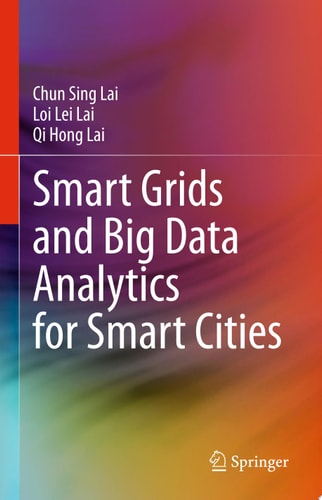
Smart Grids and Big Data Analytics for Smart Cities
0
0
As an Amazon Associate and affiliate partner, Menrva Books earns from qualifying purchases. Learn more
Author Description
This book provides a comprehensive introduction to different elements of smart city infrastructure - smart energy, smart water, smart health, and smart transportation - and how they work independently and together. Theoretical development and practical applications are presented, along with related standards, recommended practices, and professional guidelines. Throughout the book, diagrams and case studies are provided that demonstrate the systems presented, and extensive use of scenarios helps readers better grasp how smart grids, the Internet of Things, big data analytics, and trading models can improve road safety, healthcare, smart water management, and a low-carbon economy. A must-read for practicing engineers, consultants, regulators, utility operators, and environmentalists involved in smart city development, the book will also appeal to city planners and designers, as well as upper-level undergraduate and graduate students studying energy, environmental science, technology, economics, signal processing, information science, and power engineering.
Menrva's Summary
THE THESIS
This book investigates the integration of smart grids and big data analytics within the framework of smart city development. It offers a comprehensive overview of key smart city infrastructure elements, including energy, water, health, and transportation, detailing their individual functions and interdependencies. The authors present theoretical concepts alongside practical applications, referencing relevant standards and guidelines. The text is further enriched with diagrams, case studies, and scenarios designed to illustrate the application of smart grids, IoT, big data analytics, and trading models in improving urban services and fostering a low-carbon economy.
THE SCOPE MAP
- Comprehensive introduction to smart city infrastructure elements: smart energy, smart water, smart health, and smart transportation.
- Explanation of how these elements function independently and collaboratively.
- Presentation of theoretical development and practical applications.
- Inclusion of related standards, recommended practices, and professional guidelines.
- Use of diagrams and case studies to demonstrate system presentations.
- Extensive use of scenarios to illustrate concepts like smart grids, IoT, and big data analytics.
- Focus on improving road safety, healthcare, smart water management, and the low-carbon economy.
THE AUTHORITY PERSPECTIVE
The book is positioned as a vital resource for professionals and academics engaged in smart city development, including engineers, consultants, regulators, utility operators, environmentalists, and city planners. Its comprehensive approach, blending theory with practical examples and case studies, aims to provide readers with a thorough understanding of the technologies and strategies involved in creating intelligent urban environments. The inclusion of diagrams and scenarios is intended to facilitate a deeper comprehension of complex systems and their real-world impact.
Page Count:
403
Publication Date:
2020-10-31
Publisher:
Springer Nature
ISBN-10:
3030521559
ISBN-13:
9783030521554
Science & Technology
Non-Fiction
Smart Cities
Technology
urban planning
Big data
Energy Systems
Community Tags
Similar Books