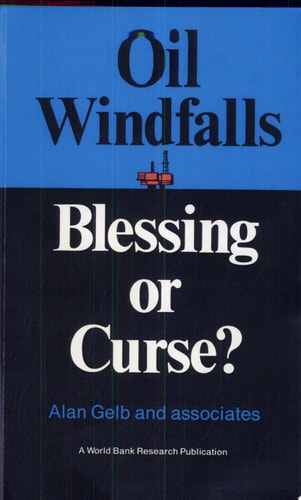
Oil Windfalls: Blessing or Curse?
0
0
As an Amazon Associate and affiliate partner, Menrva Books earns from qualifying purchases. Learn more
Author Description
Presenting new data on how oil windfalls have been used by oil producing countries, this book blends institutional and political considerations with quantitative analysis, including model simulations. Proposing that countries need to look to their economic management and its attendant political factors rather than relying on natural resources for successful economic development. Gelb concludes that much of the potential benefit of windfalls has been dissipated and explains why oil producers may actually end up worse off despite revenue gains.
Menrva's Summary
THE THESIS
This book investigates whether the sudden influx of wealth from oil production serves as a catalyst for economic prosperity or a catalyst for long-term developmental decline. Alan Gelb, an economist associated with the World Bank, utilizes a combination of empirical data, political analysis, and macroeconomic modeling to assess how oil-exporting nations manage resource windfalls. The central argument posits that the institutional and political framework of a country is a more critical determinant of success than the resource wealth itself, often leading to the dissipation of potential gains.
THE SCOPE MAP
What You Will Find
- Quantitative analysis of oil windfall utilization across multiple oil-producing nations.
- Model simulations demonstrating the long-term economic impact of resource revenue.
- Examination of the intersection between political decision-making and economic management.
- Comparative study of how institutional structures influence the success or failure of resource-dependent economies.
THE AUTHORITY PERSPECTIVE
Experts recognize this work as a foundational text in the study of the resource curse and macroeconomic management in developing nations. Readers frequently note the technical density of the prose, which balances rigorous statistical modeling with nuanced political theory.
Page Count:
357
Publication Date:
1988-10-01
Publisher:
World Bank/Oxford University Press
ISBN-10:
0195207742
ISBN-13:
9780195207743
Economics
Energy policy
Public Policy
Community Tags
Similar Books