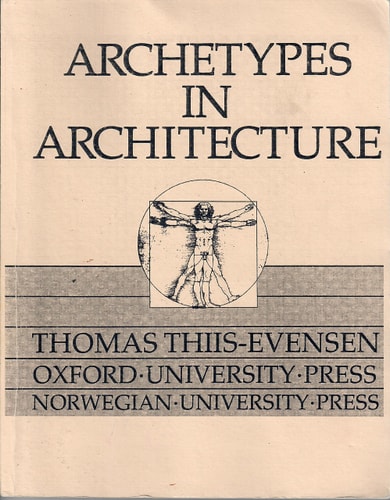
Archetypes in Architecture
0
0
As an Amazon Associate and affiliate partner, Menrva Books earns from qualifying purchases. Learn more
Author Description
In this book, Thiis-Evensen develops an architectural grammar linked to the basic elements in the art of floor, wall, and roof. Focusing on examples from architectural history, he proposes specific archetypes that illustrate how these elements vary over time and in what ways they affect us psychologically. The author argues for a basic distinction architecturally between inside and outside and examines the dynamic interaction between inside and outside space in terms of the archetypes. He also emphasises the shared aspects of our experience of architecture regardless of time or place. The book shows that these reactions to architecture are tied in with our bodily experience, and that we "convey" them to what we see. This means that the archetypes are also carriers of specific meanings, which in turn influence the experience of the relationships between inside and outside. The book further examines schematic postwar architecture and considers how it can be replaced without copying motifs from the past, providing a clearer understanding of architecture's emotional aspects for architects and designers.
Menrva's Summary
THE THESIS
How do fundamental architectural elements—floors, walls, and roofs—function as archetypes that shape human psychological experience across different historical periods? Thomas Thiis-Evensen, an established scholar in architectural theory, utilizes historical case studies to construct a grammar of architecture based on bodily perception. He argues that the distinction between interior and exterior space is mediated by these archetypes, which carry inherent meanings that transcend specific cultural or temporal contexts. By analyzing these relationships, the author provides a framework for designers to understand the emotional impact of built environments.
THE SCOPE MAP
What You Will Find
- A comprehensive analysis of the floor, wall, and roof as primary architectural archetypes.
- A theoretical framework for the dynamic interaction between interior and exterior space.
- Examination of historical architectural examples to illustrate the evolution of structural forms.
- A critique of postwar architectural schematics with suggestions for future design methodologies.
THE AUTHORITY PERSPECTIVE
Architects and design theorists frequently cite this work as a foundational text for understanding the phenomenological aspects of space. Experts highlight the author's ability to bridge the gap between abstract architectural theory and the practical, bodily experience of the built environment.
Page Count:
468
Publication Date:
1990-01-01
Publisher:
Oxford Univ Pr
ISBN-10:
0195208196
ISBN-13:
9780195208191
Architecture
Non-Fiction
Design
Art History