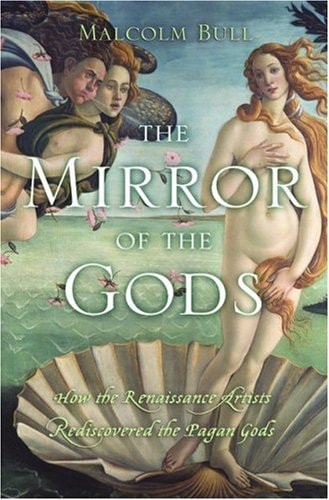
The Mirror of the Gods: How the Renaissance Artists Rediscovered the Pagan Gods
0
0
As an Amazon Associate and affiliate partner, Menrva Books earns from qualifying purchases. Learn more
Author Description
By the end of the 15th century, the remains of the ancient gods littered the landscape of Western Europe. Christianity had erased the religions of ancient Greece and Rome and most Europeans believed the destruction of classical art was God's judgment on the pagan deities. How, then, did European artists during the next three centuries create such monumental works as Botticelli's The Birth of Venus and Raphael's Parnassus?In The Mirror of the Gods, Malcolm Bull tells the revolutionary story of how the great artists of Western Europe--from Botticelli and Leonardo to Titian and Rubens--revived the gods of ancient Greece and Rome. Each chapter focuses on a different deity and sheds dazzling new light on such familiar figures as Venus, Hercules, and Bacchus. Bull draws on hundreds of illustrations to illuminate the ancient myths through the eyes of Renaissance and Baroque artists, not as they appear in classical literature. When the wealthy and powerful princes of Christian Europe began to identify with the pagan gods, myth became the artist's medium for telling the story of his own time. The Mirror of the Gods is the fascinating and extraordinary story of how Renaissance artists combined mythological imagery and artistic virtuosity to change the course of western art.The Mirror of the Gods profoundly deepens our understanding of some of the greatest and most subversive artwork in European history. This delightfully told, lavishly illustrated, and extraordinary book amply rewards our ongoing fascination with classical myth and Renaissance art.
Menrva's Summary
THE THESIS
How did Renaissance and Baroque artists reconcile the revival of pagan deities with the prevailing Christian orthodoxy of their time? Malcolm Bull, a scholar of art history and cultural theory, investigates the transition of classical mythology from discarded relics to central motifs in Western art. He argues that artists utilized these figures not merely as aesthetic subjects, but as complex vehicles for political and personal expression within the power structures of early modern Europe.
THE SCOPE MAP
What You Will Find
- Analysis of the shift in perception of classical deities from the 15th to the 18th century.
- Examination of specific mythological figures including Venus, Hercules, and Bacchus.
- Integration of hundreds of visual illustrations to demonstrate stylistic evolution.
- Discussion of how European princes and patrons used pagan imagery to project authority.
THE AUTHORITY PERSPECTIVE
Scholars and art historians frequently cite this work for its ability to bridge the gap between classical literature and the visual interpretations of the Renaissance. Readers often note the accessible prose style, which manages to maintain academic rigor while exploring the subversive nature of mythological art.
Page Count:
496
Publication Date:
2005-02-21
Publisher:
Oxford University Press
ISBN-10:
0195219236
ISBN-13:
9780195219234
Non-Fiction
Mythology
Renaissance
European History
Classical Mythology
Art History