Chasin' The Bird: The Life and Legacy of Charlie Parker
0
0
As an Amazon Associate and affiliate partner, Menrva Books earns from qualifying purchases. Learn more
Author Description
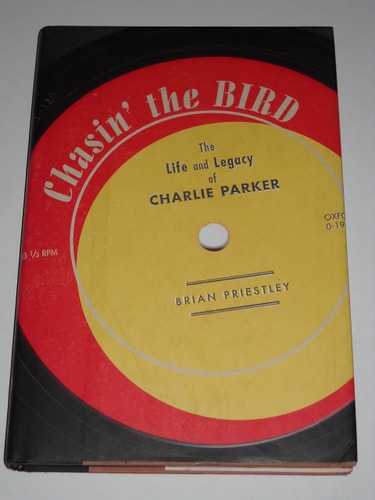
Charlie Parker has been idolized by generations of jazz musicians and fans. Indeed, his spectacular musical abilities--his blinding speed and brilliant improvisational style--made Parker a legend even before his tragic death at age thirty-four.Now, in Chasin' The Bird, Brian Priestley offers a marvelous biography of this jazz icon, ranging from his childhood in Kansas City to his final harrowing days in New York. Priestley offers new insight into Parker's career, beginning as a teenager single-mindedly devoted to mastering the saxophone. We follow Parker on his first trip to New York, penniless, washing dishes for $9.00 a week at Jimmy's Chicken Shack, a favorite hangout of the great Art Tatum, whose stunning speed and ingenuity were an influence on the young musician. Priestley sheds light on Parker's collaborations with Dizzy Gillespie, Max Roach, Bud Powell, Mary Lou Williams, and Thelonious Monk, and he illuminates such classic recordings as "Salt Peanuts" and "A Night in Tunisia" and Parker's own compositions "Shaw 'Nuff" and "Yardbird Suite"--music which defined an era. Priestley also gives us an unflinching look at Parker's dark side--the drug abuse, heavy drinking, and tangled relations with women and the law. He recounts the death of Parker's daughter Pree, who was only two-and-a-half years old, and Parker's own death at thirty-four, in such wretched condition that the doctor listed his age as fifty-three.With an invaluable discography that lists every recording of Charlie Parker that has ever been made publicly available, here is a must-have biography of a true jazz giant, one that helps us penetrate the dazzling surface to grasp the artistry beneath.
Menrva's Summary
THE THESIS
What factors defined the meteoric rise and tragic decline of jazz innovator Charlie Parker? Brian Priestley, a seasoned music critic and author, utilizes archival research and musical analysis to examine the life of the saxophone virtuoso. The text argues that Parker's artistic brilliance was inextricably linked to his personal volatility, providing a comprehensive look at the environment that fostered bebop while acknowledging the destructive habits that curtailed his career.
THE SCOPE MAP
What You Will Find
- A detailed chronological account of Parker's life from Kansas City to New York.
- Analysis of key musical collaborations with figures like Dizzy Gillespie and Thelonious Monk.
- Examination of Parker's influence on the evolution of jazz improvisation and composition.
- An exhaustive discography detailing publicly available recordings of the artist.
THE AUTHORITY PERSPECTIVE
Critics and jazz historians frequently cite this work as a balanced, objective account that avoids romanticizing the subject's struggles. Readers often note the inclusion of the comprehensive discography as a primary value for collectors and scholars of the bebop era.
Page Count:
264
Publication Date:
2006-03-01
Publisher:
Oxford University Press
ISBN-10:
0195304640
ISBN-13:
9780195304640
Non-Fiction
Music
Biography
Jazz musicians
Jazz
Community Tags
Similar Books