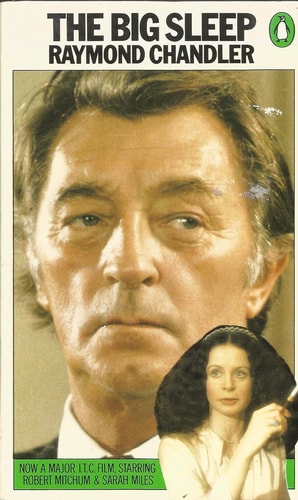
The Big Sleep
0
0
As an Amazon Associate and affiliate partner, Menrva Books earns from qualifying purchases. Learn more
Author Description
This North Point Press trade edition is based on the illustrated limited edition designed and produced by Arion Press. Arion "produces some of the most beautiful limited-edition books in the world," according to the New York Times. For the third in its series of classic detective novels, the Arion Press selected photographer Lou Stoumen to visualize the rich girls, hoodlums, and petty grifters with whom Chandler peopled Los Angeles in the 1940s. The characters were costumed and posed in the manner of motion picture publicity stills. The resulting photographs depict crucial events in the story, like a "paper movie", as Stoumen writes in his afterword. In designing The Big Sleep, Andrew Hoyem recalled modern styles current when the novel appeared half a century ago.
Menrva's Summary
THE PULSE
Private investigator Philip Marlowe is hired by a wealthy, dying general to resolve a blackmail scheme involving his youngest daughter, only to find himself entangled in a web of murder and corruption. Marlowe navigates the social strata of 1940s Los Angeles, moving from opulent mansions to dark, dangerous back alleys. He faces opposition from ruthless criminals, corrupt law enforcement, and the complex, often deceptive members of the Sternwood family. The narrative is presented in a sharp, first-person perspective that emphasizes the cynical atmosphere of the setting.
INSIDE THE PAGES
- First-person hardboiled narration
- Intricate, multi-layered mystery plot
- Atmospheric depiction of 1940s Los Angeles
- Sharp, witty, and cynical dialogue
- Exploration of moral ambiguity and corruption
- Focus on the private investigator archetype
- Pacing driven by rapid-fire confrontations
- Detailed character studies of the urban underworld
THE COLLECTIVE ECHO
Readers and critics frequently highlight the prose style as a defining element of the hardboiled genre, noting its rhythmic, cynical wit. Discussion often centers on the complexity of the plot, which many find intentionally labyrinthine to mirror the confusion of the protagonist. The atmosphere of 1940s Los Angeles is consistently praised for its vivid, gritty realism that grounds the narrative. Many observers note that the character development of Philip Marlowe sets the standard for the private eye archetype in modern crime fiction. The balance between sharp dialogue and descriptive action remains a primary focus for those analyzing the effectiveness of the story's pacing.
Page Count:
224
Publication Date:
1978-01-01
Publisher:
Penguin Books Ltd
ISBN-10:
0140006524
ISBN-13:
9780140006520
Mystery
Crime
Noir
classic
Hard-Boiled
Hardboiled
Detective
High Fantasy