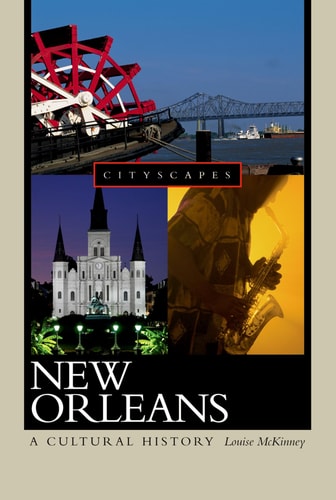
New Orleans: A Cultural History (Cityscapes (Paperback))
0
0
As an Amazon Associate and affiliate partner, Menrva Books earns from qualifying purchases. Learn more
Author Description
Founded in 1718 by two French-Canadian brothers for French King Louis XIV, New Orleans grew from its roots as a Euro-Caribbean port city at the nexus of North, Central and South America. Situated at the bottom of the Mississippi River Delta, the city became "Paris on the Mississippi," the fashionable cultural capital of the American South, home to America's first opera house and birthplace of jazz.Many think of New Orleans, with its antebellum mansions, above-ground cemeteries and ghostly moss-bearded oaks as a haunted place. It is certainly the most un-American of American cities, creating its own laid-back "Big Easy" attitude from the customs of the people who founded it: French and Spanish colonists, gens de couleur libres, Northern adventurers, riverboat men, pirates, and Cajuns. From this eclectic mix of influences has evolved a distinctive Creole culture, expressed in language, architecture and cuisine.Louise McKinney explores the soul of this deeply spiritual and hedonistic place, where every year the pre-Lenten Mardi Gras bursts forth with outrageous excess.
Menrva's Summary
THE THESIS
How did the unique geographic, colonial, and social intersections of New Orleans cultivate a distinct identity that diverges from the broader American experience? Louise McKinney investigates the historical evolution of the city from its 1718 founding to its modern status as a cultural anomaly. By examining the convergence of French, Spanish, African, and Caribbean influences, the author constructs a framework that explains the city's architectural, culinary, and social idiosyncrasies. The text serves as a comprehensive analysis of the forces that shaped the 'Big Easy' attitude.
THE SCOPE MAP
What You Will Find
- Historical analysis of the city's founding by French-Canadian explorers and its development as a Euro-Caribbean port.
- Examination of the diverse demographic influences including French and Spanish colonists, gens de couleur libres, and Cajun populations.
- Exploration of cultural markers such as the development of jazz, the establishment of the first American opera house, and the tradition of Mardi Gras.
- Geographic assessment of the city's position at the Mississippi River Delta and its impact on trade and cultural exchange.
THE AUTHORITY PERSPECTIVE
Critics and readers frequently note that this work provides a balanced overview of the city's complex social history. Experts highlight the text as a useful primer for those seeking to understand the foundational elements of New Orleans' unique cultural landscape.
Page Count:
250
Publication Date:
2006-04-20
Publisher:
Oxford University Press
ISBN-10:
0195301366
ISBN-13:
9780195301366
Travel
History
United States
New Orleans
Geography
Social Life
Community Tags
Similar Books