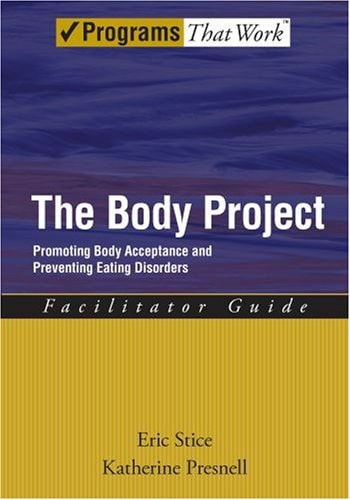
The Body Project: Promoting Body Acceptance and Preventing Eating Disorders Facilitator Guide
0
0
As an Amazon Associate and affiliate partner, Menrva Books earns from qualifying purchases. Learn more
Author Description
Ours is a society in which thinness, particularly in women, is idealized, even at the cost of health. Adolescent girls and young women are especially at risk of developing eating disorders such as anorexia nervosa, bulimia nervosa, and binge eating disorder. The need for wide-spread prevention among at-risk populations is paramount, as these disorders are often difficult to treat and can contribute to a range of physical and mental health problems. Studies have found that a cognitive dissonance-based intervention significantly outperforms other intervention programs and is successful in preventing onset of eating disorders.This facilitator guide outlines a two part group intervention program for adolescent and college-aged girls at risk of developing eating disorders. In the first part of the program, participants critique the thin-ideal through discussion, role-playing, and written exercises. Participants learn skills that increase body satisfaction, decrease unhealthy weight control behaviors, and prevent eating disorder symptoms. The second part of the intervention is designed to help participants make gradual and permanent lifestyle changes to achieve a healthy body weight. It teaches how to eat for energy balance, make healthy food choices, and incorporate physical exercise into a daily routine.This group therapy program is based on 16 years of research and has been completed by over 1000 adolescent girls and young women. It can be effectively delivered by real world providers, such as school counselors, nurses, and teachers. This facilitator guide provides all the information needed to successfully implement the program, including explanation of Cognitive Dissonance theory, session outlines complete with exercises, and recommendations on how to train group leaders and recruit participants.
Menrva's Summary
THE THESIS
This guide investigates the efficacy of cognitive dissonance-based interventions in preventing the onset of eating disorders among adolescent and college-aged women. Authors Eric Stice and Katherine Presnell draw upon sixteen years of clinical research to provide a structured, evidence-based framework for group therapy. The text argues that by actively critiquing the societal thin-ideal, participants can reduce unhealthy weight control behaviors and improve body satisfaction through a two-part intervention program.
THE SCOPE MAP
What You Will Find
- A comprehensive two-part group intervention curriculum designed for school counselors, nurses, and educators.
- Methodologies for implementing cognitive dissonance exercises, including role-playing and written reflection.
- Practical strategies for energy balance, healthy nutritional choices, and sustainable physical activity.
- Administrative guidance on recruiting participants, training group facilitators, and managing program logistics.
THE AUTHORITY PERSPECTIVE
Experts recognize this guide as a foundational resource for clinical and educational settings aiming to implement evidence-based eating disorder prevention. Practitioners frequently note the clarity of the session outlines and the practical utility of the provided exercises for real-world application.
Page Count:
152
Publication Date:
2007-04-12
Publisher:
Oxford University Press
ISBN-10:
0195319893
ISBN-13:
9780195319897
Health
Psychology
Self Help
Mental Health
Education
Body Image
Psychotherapy
Community Tags
Similar Books