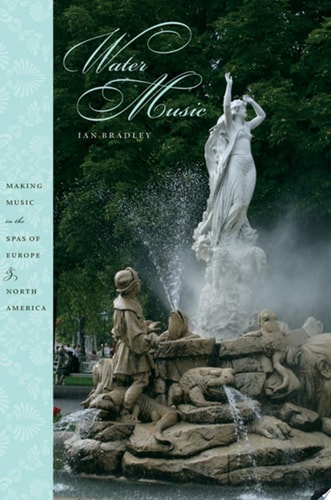
Water Music: Making Music in the Spas of Europe and North America
0
0
As an Amazon Associate and affiliate partner, Menrva Books earns from qualifying purchases. Learn more
Author Description
Many of the most famous composers in classical music spent considerable periods in spa towns, whether taking in the waters, or searching for patrons among the rich and influential clientele who frequented these pioneer resorts, or soaking up the relaxing and decadent ambience of these enchanted and magical places. At Baden bei Wein, Mozart wrote his Ave Verum Corpus, and Beethoven sketched out his Ninth Symphony. Johannes Brahms spent 17 summers in Baden-Baden, where he stayed in his own specially-built composing cavern and consorted with Clara Schumann. Berlioz came to conduct in Baden-Baden for nine seasons, writing his last major work, Beatrice and Benedict, for the town's casino manager. Chopin, Liszt, and Dvorak were each regular visitors to Carlsbad and Marienbad. And it was in Carlsbad that Beethoven met Goethe. Concerts, recitals, and resident orchestras have themselves played a major role in the therapeutic regimes and the social and cultural life of European and North American watering places since the late eighteenth century. To this day, these spa towns continue to host major music festivals of the highest caliber, drawing musicians and loyal audiences on both local and international levels.This book explores the music making that went on in the spas and watering places in Europe and the United States during their heyday between the early-eighteenth and the mid-twentieth centuries. Music was a hugely important part of the experience of taking a spa cure. Bands played during the early morning and late afternoon while people took the waters and bathed. Spa orchestras and ensembles entertained those gathering socially or resting in assembly rooms, pump rooms and in gardens and parks. In the evenings spa guests enjoyed concerts, visits to the theatre, balls, dances and gambling sessions at the casino, at all of which music played a major role.Expert author Ian Bradley draws on original archival material and the diaries and letters of composers. His book rang
Menrva's Summary
THE THESIS
This book investigates the historical intersection of classical music composition and performance within the therapeutic and social environments of European and North American spa towns. Author Ian C. Bradley, a scholar of cultural history, utilizes archival records, personal correspondence, and diaries of renowned composers to document how these resorts functioned as vital hubs for musical creation and consumption between the eighteenth and twentieth centuries. The work argues that the spa experience was fundamentally shaped by the presence of resident orchestras, concert series, and the patronage of the elite.
THE SCOPE MAP
What You Will Find
- Historical analysis of music culture in spa towns from the early eighteenth to the mid-twentieth century.
- Documentation of specific works composed by figures such as Mozart, Beethoven, and Brahms during their spa residencies.
- Examination of the social role of music in assembly rooms, pump rooms, and casino environments.
- Primary source evidence derived from composer letters, diaries, and archival performance records.
THE AUTHORITY PERSPECTIVE
Experts recognize this work as a detailed contribution to the social history of music, noting its success in connecting high-culture composition with the leisure habits of the nineteenth-century elite. Readers frequently highlight the book's ability to contextualize the development of classical music within the specific, often overlooked, geography of European watering places.
Page Count:
240
Publication Date:
2010-02-22
Publisher:
Oxford University Press
ISBN-10:
0195327349
ISBN-13:
9780195327342
Travel
Music History
Conducting
Cultural History
European History
Health Resorts
Humanities
Social History
Community Tags
Similar Books