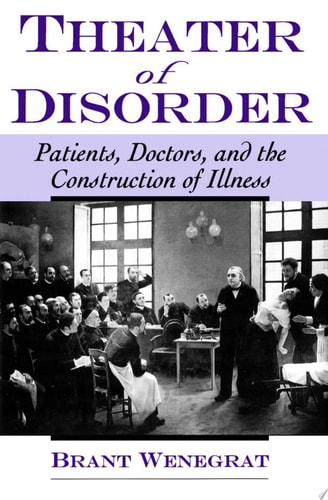
Theater of Disorder: Patients, Doctors, and the Construction of Illness
0
0
As an Amazon Associate and affiliate partner, Menrva Books earns from qualifying purchases. Learn more
Author Description
There are certain phenomena, such as hypnosis, hysteria, multiple personality disorder, recovered memory syndrome, claims of satanic ritual abuse, alien abduction syndrome, and culture-specific disorders that, although common, are difficult to explain completely. The purpose of this volume is to apply a model of social relations to these phenomena in order to provide a different explanation for them. Wenegrat argues that they are socially constructed illness roles or purposive behavior patterns into which patients fall while receiving either unintentional or intentional cues during interactions with caretakers and authority figures. The application of the social-relations model raises some important, yet previously overlooked, questions about these phenomena. It also illustrates some important aspects of human nature and consciousness, places illness behaviors in their larger, cultural context, and shows the way to a new and different view of mental life.
Menrva's Summary
THE THESIS
Can complex psychological phenomena and culture-specific disorders be understood as socially constructed illness roles rather than purely biological or individual pathologies? Brant Wenegrat, a psychiatrist, utilizes a social-relations model to examine how patients adopt specific behavioral patterns through cues provided by authority figures and caretakers. By analyzing the interactional dynamics between doctors and patients, the author argues that many enigmatic conditions are shaped by the social environment and the expectations inherent in the therapeutic relationship.
THE SCOPE MAP
What You Will Find
- Analysis of controversial psychological phenomena including multiple personality disorder, recovered memory syndrome, and alien abduction syndrome.
- Application of a social-relations model to explain the development of illness roles.
- Examination of the influence of unintentional and intentional cues from authority figures on patient behavior.
- Contextualization of mental illness within broader cultural and social frameworks.
THE AUTHORITY PERSPECTIVE
Experts and readers often note the provocative nature of Wenegrat's thesis, which challenges traditional clinical interpretations of psychiatric disorders. The text is frequently cited for its critical approach to the social construction of illness and its implications for modern clinical practice.
Page Count:
304
Publication Date:
2001-01-01
Publisher:
Oxford University Press
ISBN-10:
0195349768
ISBN-13:
9780195349764
Psychology
Mental Health
Sociology
Social Science
MEDICAL History