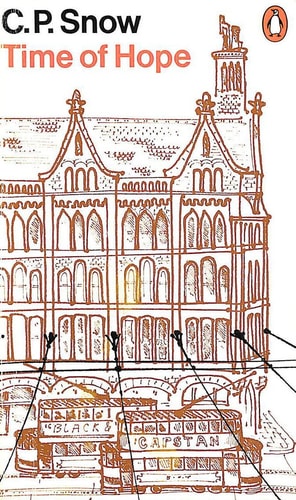
Time of Hope
0
0
As an Amazon Associate and affiliate partner, Menrva Books earns from qualifying purchases. Learn more
Author Description
The life of Lewis Eliot - documented across eleven novels with C. P. Snow's distinctive blend of precision and compassion - begins in Time of Hope.The novel opens in the summer of 1914 when nine-year-old Lewis hears the news of his father's bankruptcy, and closes in 1933, when, although hindered in his promising career as a lawyer by the neuroses of his wife, he realises that he cannot bear to leave her. In the course of this ambitious but ultimately unremarkable man's early life rage the great questions of the age - questions of class, of gender, of ideology and of war - asked and answered with wisdom and tolerance.A meticulous study of the public issues and private problems of post-war Britain, C. P. Snow's Strangers and Brothers sequence is a towering achievement that stands alongside Anthony Powell's A Dance to the Music of Time as one of the great romans-fleuves of the twentieth century.
Menrva's Summary
THE PULSE
Lewis Eliot navigates the precarious transition from childhood poverty to professional adulthood amidst the shifting social landscape of early twentieth-century Britain. The narrative follows Lewis as he attempts to establish himself as a lawyer while contending with the volatile emotional state of his wife and the rigid class structures of the era. Through a retrospective lens, the story examines the intersection of personal ambition and the broader political climate of the interwar period. The prose maintains a measured, observational tone, focusing on the internal conflicts of a man striving for stability in a world defined by uncertainty.
INSIDE THE PAGES
- First-person retrospective narration
- Detailed exploration of the British legal profession
- Examination of class mobility in the early 1900s
- Focus on the psychological impact of marital instability
- Realistic depiction of post-World War I social shifts
- Character-driven narrative structure
- Meticulous attention to period-specific social etiquette
- Thematic focus on the tension between public duty and private desire
THE COLLECTIVE ECHO
Readers and critics frequently note the intellectual rigor and steady pacing that define Snow's prose style. Discussion often centers on the author's ability to balance the minutiae of professional life with the broader sociopolitical concerns of the twentieth century. Many observers highlight the clinical, almost detached quality of the narrative, which serves to emphasize the protagonist's own analytical nature. The work is often compared to other major sequences of the era for its commitment to documenting the evolution of a single life against the backdrop of history. Readers appreciate the depth of character development, particularly in how the protagonist's internal growth mirrors the changing values of his society.
Page Count:
368
Publication Date:
1970-01-01
Publisher:
Penguin Books
ISBN-10:
0140017631
ISBN-13:
9780140017632
Historical Fiction
Literary Fiction
Contemporary
20th Century
British literature
Bildungsroman
Community Tags
Similar Books