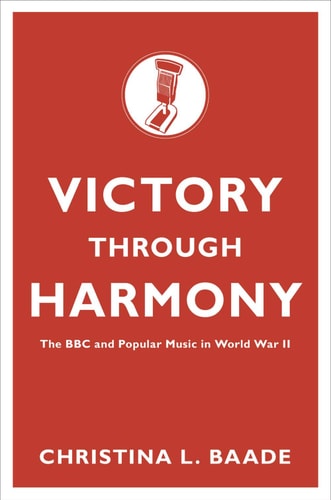
Victory through Harmony: The BBC and Popular Music in World War II
0
0
As an Amazon Associate and affiliate partner, Menrva Books earns from qualifying purchases. Learn more
Author Description
To serve the British nation in World War II, the BBC charged itself with mobilizing popular music in support of Britain's war effort. Radio music, British broadcasters and administrators argued, could maintain civilian and military morale, increase industrial production, and even promote a sense of Anglo-American cooperation. Because of their widespread popularity, dance music and popular song were seen as ideal for these tasks; along with jazz, with its American associations and small but youthful audience, these genres suddenly gained new legitimacy at the traditionally more conservative BBC.In Victory through Harmony, author Christina Baade both tells the fascinating story of the BBC's musical participation in wartime events and explores how popular music and jazz broadcasting helped redefine notions of war, gender, race, class, and nationality in wartime Britain. Baade looks in particular at the BBC's pioneering Listener Research Department, which tracked the tastes of select demographic groups including servicemen stationed overseas and young female factory workers in order to further the goal of entertaining, cheering, and even calming the public during wartime. The book also tells how the wartime BBC programmed popular music to an unprecedented degree with the goal of building national unity and morale, promoting new roles for women, virile representations of masculinity, Anglo-American friendship, and pride in a common British culture. In the process, though, the BBC came into uneasy contact with threats of Americanization, sentimentality, and the creativity of non-white "others," which prompted it to regulate and even censor popular music and performers.Rather than provide the soundtrack for a unified "People's War," Baade argues, the BBC's broadcasting efforts exposed the divergent ideologies, tastes, and perspectives of the nation. This illuminating book will interest all readers in popular music, jazz, and radio, as well as British cultural history and g
Menrva's Summary
THE THESIS
This book investigates how the BBC utilized popular music and jazz as strategic tools to bolster national morale and define British identity during the Second World War. Christina L. Baade, a scholar of music and media, examines the intersection of broadcasting policy and wartime social objectives. By analyzing internal BBC documents and the output of the Listener Research Department, she argues that the effort to create a unified national soundtrack actually revealed deep-seated tensions regarding class, race, gender, and the influence of American culture.
THE SCOPE MAP
What You Will Find
- Analysis of the BBC's Listener Research Department and its demographic tracking methods.
- Examination of the role of dance music and jazz in wartime propaganda and morale building.
- Discussion of the tensions between British cultural preservation and the influence of Americanization.
- Exploration of how broadcasting policies intersected with shifting social norms regarding gender and national identity.
THE AUTHORITY PERSPECTIVE
Scholars of media history and musicology recognize this work as a significant contribution to the study of wartime broadcasting and cultural policy. The text is noted for its rigorous use of archival research to challenge the narrative of a monolithic national experience during the war.
Page Count:
288
Publication Date:
2011-11-24
Publisher:
Oxford University Press
ISBN-10:
0195372018
ISBN-13:
9780195372014
Music
History
Music British
Popular music
British Broadcasting Corporation
Radio
British History
Community Tags
Similar Books