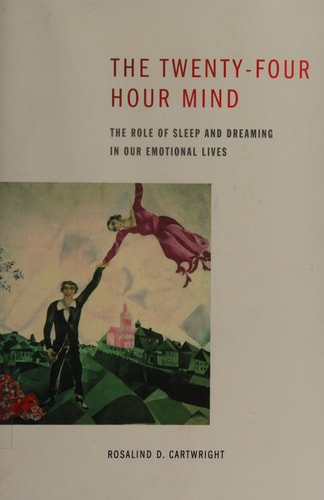
The Twenty-four Hour Mind: The Role of Sleep and Dreaming in Our Emotional Lives
0
0
As an Amazon Associate and affiliate partner, Menrva Books earns from qualifying purchases. Learn more
Author Description
In January of 1997, an otherwise nonviolent man under great stress at work brutally murdered his wife in their backyard. He then went back to bed, awakening only when police entered his home. He claimed to have no memory of the event because, while his body was awake at the time, his mind was not. He had been sleepwalking.In The Twenty-four Hour Mind, sleep scientist Rosalind Cartwright brings together decades of research into the bizarre sleep disorders known as parasomnias to propose a new theory of how the human mind works consistently throughout waking and sleeping hours. Thanks to increasingly sophisticated EEG and brain imaging technologies, we now know that our minds do not simply "turn off" during sleep. Rather, they continue to be active, and research has indicated that one of the primary purposes of sleep is to aid in regulating emotions and processing experiences that occur during preceding waking hours. As such, when sleep is neurologically or genetically impaired or just too short, the processes that good sleep facilitates--those that usually have a positive effect on our mood and performance--can short circuit, with negative results that occasionally reach tragic proportions. Examining the interactions between conscious and unconscious forms of thinking as they proceed throughout the cycles of sleeping, dreaming, and waking, Cartwright demystifies the inner workings of the human mind that trigger sleep problems, how researchers are working to control them, and how they can apply what they learn to further our understanding of the brain. Along the way, she provides a lively account of the history of sleep research and the birth of sleep medicine that will initiate readers into this fascinating field of inquiry and the far-reaching implications it will have on the future of neuroscience. The Twenty-four Hour Mind offers a unique look at a relatively new area of study that will be of interest to those with and without sleep problems, as well as anyone curious about the inner workings of the human mind.
Menrva's Summary
THE THESIS
This book investigates the hypothesis that the human mind functions as a continuous, twenty-four-hour system where sleep and dreaming serve as essential mechanisms for emotional regulation and experience processing. Rosalind D. Cartwright, a pioneer in sleep research, utilizes decades of clinical data and advancements in EEG and brain imaging to argue that sleep is not a period of mental inactivity. She posits that when these regulatory processes are disrupted by parasomnias or sleep deprivation, the resulting cognitive failures can lead to severe behavioral consequences. The text provides a comprehensive framework for understanding how the brain maintains psychological stability across the waking and sleeping cycle.
THE SCOPE MAP
What You Will Find
- Analysis of parasomnias and their impact on human behavior and legal culpability.
- Examination of the neurological connection between REM sleep and emotional processing.
- Historical overview of the development of sleep medicine and clinical research methodologies.
- Discussion of modern brain imaging technologies used to monitor cognitive activity during sleep.
THE AUTHORITY PERSPECTIVE
Experts recognize this work as a significant contribution to the field of sleep medicine, particularly for its accessible synthesis of complex neurological data. Readers frequently note that the text successfully bridges the gap between clinical case studies and broader theoretical implications for neuroscience.
Page Count:
224
Publication Date:
2010-06-24
Publisher:
Oxford University Press
ISBN-10:
0195386833
ISBN-13:
9780195386837
Science
Psychology
Neuroscience
Brain
Medicine
Community Tags
Similar Books





Reader Comments
Share Your Thoughts
No comments yet. Be the first to share your thoughts!