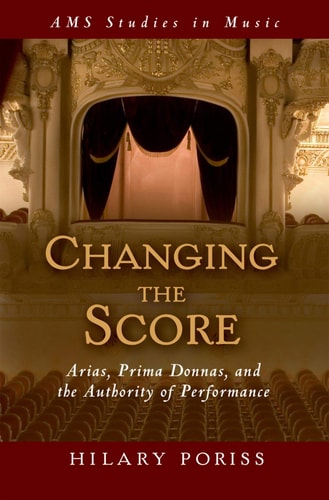
Changing the Score: Arias, Prima Donnas, and the Authority of Performance
0
0
As an Amazon Associate and affiliate partner, Menrva Books earns from qualifying purchases. Learn more
Author Description
This study seeks to explore the role and significance of aria insertion, the practice that allowed singers to introduce music of their own choice into productions of Italian operas. Each chapter investigates the art of aria insertion during the nineteenth century from varying perspectives, beginning with an overview of the changing fortunes of the practice, followed by explorations of individual prima donnas and their relationship with particular insertion arias: Carolina Ungher's difficulties in finding a "perfect" aria to introduce into Donizetti's Marino Faliero; Guiditta Pasta's performance of an aria from Pacini's Niobe in a variety of operas, and the subsequent fortunes of that particular aria; Maria Malibran's interpolation of Vaccai's final scene from Giulietta e Romeo in place of Bellini's original setting in his I Capuleti e i Montecchi; and Adelina Patti's "mini-concerts" in the lesson scene of Il barbiere di Siviglia.The final chapter provides a treatment of a short story, "Memoir of a Song," narrated by none other than an insertion aria itself, and the volume concludes with an appendix containing the first modern edition of this short story, a narrative that has lain utterly forgotten since its publication in 1849. This book covers a wide variety of material that will be of interest to opera scholars and opera lovers alike, touching on the fluidity of the operatic work, on the reception of the singers, and on the shifting and hardening aesthetics of music criticism through the period.
Menrva's Summary
THE THESIS
This study investigates the historical practice of aria insertion in nineteenth-century Italian opera to determine how singers exerted authority over the musical works they performed. Hilary Poriss, a musicologist specializing in nineteenth-century opera, utilizes archival research and performance history to analyze how prima donnas manipulated operatic scores to suit their vocal strengths and audience expectations. The book argues that the fluidity of the operatic work during this era challenges modern notions of the composer's absolute authority over the final product.
THE SCOPE MAP
What You Will Find
- Historical analysis of the practice of aria insertion in nineteenth-century Italian opera.
- Case studies of prominent prima donnas including Carolina Ungher, Giuditta Pasta, Maria Malibran, and Adelina Patti.
- Examination of the shifting aesthetics of music criticism and the reception of vocal performance.
- A critical edition and analysis of the 1849 short story "Memoir of a Song" which provides a unique perspective on the insertion practice.
THE AUTHORITY PERSPECTIVE
Scholars of musicology recognize this work as a significant contribution to the study of performance practice and the history of operatic reception. Readers frequently note the academic density of the prose, which provides a rigorous examination of the tension between composer intent and performer agency.
Page Count:
240
Publication Date:
2009-08-26
Publisher:
Oxford University Press
ISBN-10:
019538671X
ISBN-13:
9780195386714
Music
Kindle Store
Opera
Categories
Kindle eBooks
Cultural History
Opera italy
Musical Genres
Music History
Music