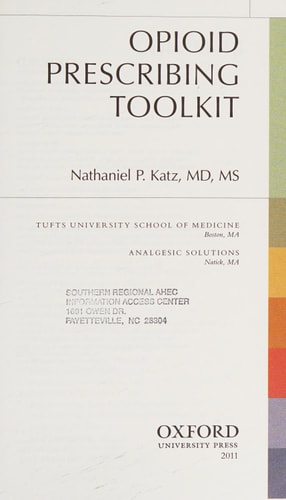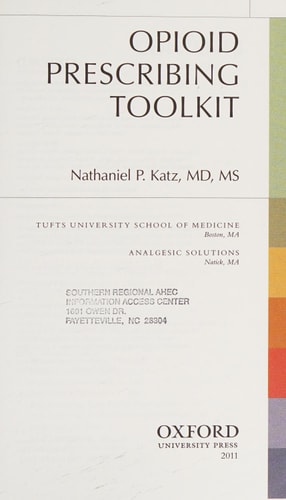
Opioid Prescribing Toolkit
0
0
As an Amazon Associate and affiliate partner, Menrva Books earns from qualifying purchases. Learn more
Author Description
Relief of pain is one of the most ancient and important obligations of the physician. Relieving both acute and chronic pain frequently requires the use of opioid analgesics. Like all medications, opioids are associated with complications, including the risk of abuse and addiction. This toolkit aims to mitigate some of the anxiety surrounding opioid prescription by providing the essential information necessary to help busy clinicians make informed decisions for their patients about effective and responsible pain management. The risks and benefits of opioid therapy depend upon the patient, prescriber, practice setting, and community. Opioids have been shown to work for most kinds of pain, and most opioids have similar efficacy. However, like all other analgesics for chronic pain, opioids only work for a minority of patients long-term, and even then only partially relieve pain. To ensure responsible patient care, physicians must have realistic expectations concerning the efficacy of long-term opioid therapy, and must impart these expecations to patients and their families. It is an unwavering obligation of all physicians to treat pain aggressively, just like it is important to treat diabetes, asthma, or any other illness aggressively. However, there are many approaches to pain management, and no obligation exists to provide opioids when the risks outweigh the benefits, or when a reasonable trial of opioid therapy has not produced a favorable risk-benefit balance. This toolkit provides essential information and guidance to aid time-pressed clinicians in making rational medical decisions regarding effective and responsible pain management. This practical workbook provides a comprehensive array of user-friendly tools to help physicians safely and effectively prescribe opioids to patients with chronic pain. In addition to clear algorithms, report templates, and even instructions for busy office staff, this concise volume provides invaluable "how to" guidance for easy adopt
Menrva's Summary
THE THESIS
This toolkit addresses the clinical challenge of balancing effective pain relief with the risks of opioid abuse and addiction in a medical setting. Author Nathaniel P. Katz provides a structured framework for busy clinicians to navigate the complexities of opioid therapy. By synthesizing clinical data and risk-benefit analysis, the text aims to standardize responsible prescribing practices while managing patient expectations regarding long-term efficacy.
THE SCOPE MAP
What You Will Find
- Clinical algorithms for assessing patient suitability for opioid therapy
- Standardized report templates for documentation and compliance
- Practical guidance for office staff on managing patient interactions
- Evidence-based strategies for evaluating risk-benefit ratios in chronic pain management
THE AUTHORITY PERSPECTIVE
Clinicians frequently utilize this volume as a practical reference for integrating safe prescribing habits into daily practice. Experts note that the text provides a clear, actionable methodology for navigating the regulatory and ethical demands of modern pain management.
Page Count:
80
Publication Date:
2010-01-01
Publisher:
Oxford University Press
ISBN-10:
0195390113
ISBN-13:
9780195390117
Medical
Reference
Pain
Pharmacology
Analgesics
Opioids
Community Tags
Similar Books