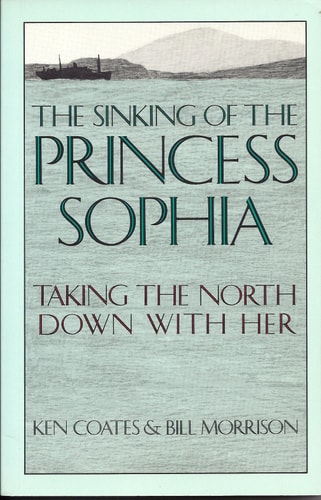
The Sinking of the Princess Sophia: Taking the North Down with Her
0
0
As an Amazon Associate and affiliate partner, Menrva Books earns from qualifying purchases. Learn more
Author Description
On October 23, 1918, the Canadian Pacific steamer Princess Sophia left Skagway, Alaska, on its last run of the season to Vancouver, Victoria, and Seattle. A storm rose and at 2 a.m. it ran aground on Vanderbilt Reef. Rescue vessels were quickly assembled, but the storm worsened and they were forced to take shelter themselves. By the following morning, the Princess Sophia had sunk to the bottom of the Lynn Canal, taking all of its passengers--a significant cross-section of the population of the Yukon and Alaska--with it. This volume examines the impact of this loss on a society that, with the end of the gold rush, was already in decline.
Menrva's Summary
THE THESIS
This book investigates the 1918 sinking of the Princess Sophia and its profound socio-economic consequences for the declining gold rush communities of the Yukon and Alaska. Authors Ken S. Coates and William R. Morrison utilize historical records and archival research to reconstruct the timeline of the disaster. They argue that the loss of the vessel served as a final, devastating blow to a region already struggling with economic instability and population loss following the end of the Klondike Gold Rush. The text provides a detailed analysis of the maritime failure and the subsequent impact on the social fabric of the Pacific Northwest.
THE SCOPE MAP
What You Will Find
- A detailed chronological account of the Princess Sophia's final voyage from Skagway to the Lynn Canal.
- Analysis of the maritime conditions and the failed rescue attempts during the 1918 storm.
- Examination of the passenger manifest and the demographic significance of those lost.
- Historical context regarding the economic decline of the Yukon and Alaska post-gold rush.
THE AUTHORITY PERSPECTIVE
Historians and maritime enthusiasts recognize this work as a definitive account of one of the most significant shipwrecks in Pacific Northwest history. Readers frequently note the meticulous research and the authors' ability to connect a singular maritime tragedy to broader regional historical trends.
Page Count:
240
Publication Date:
1990-05-10
Publisher:
Oxford University Press
ISBN-10:
0195407849
ISBN-13:
9780195407846
History
Disaster
Canadian History
Maritime history
Alaska
Ships
Community Tags
Similar Books